
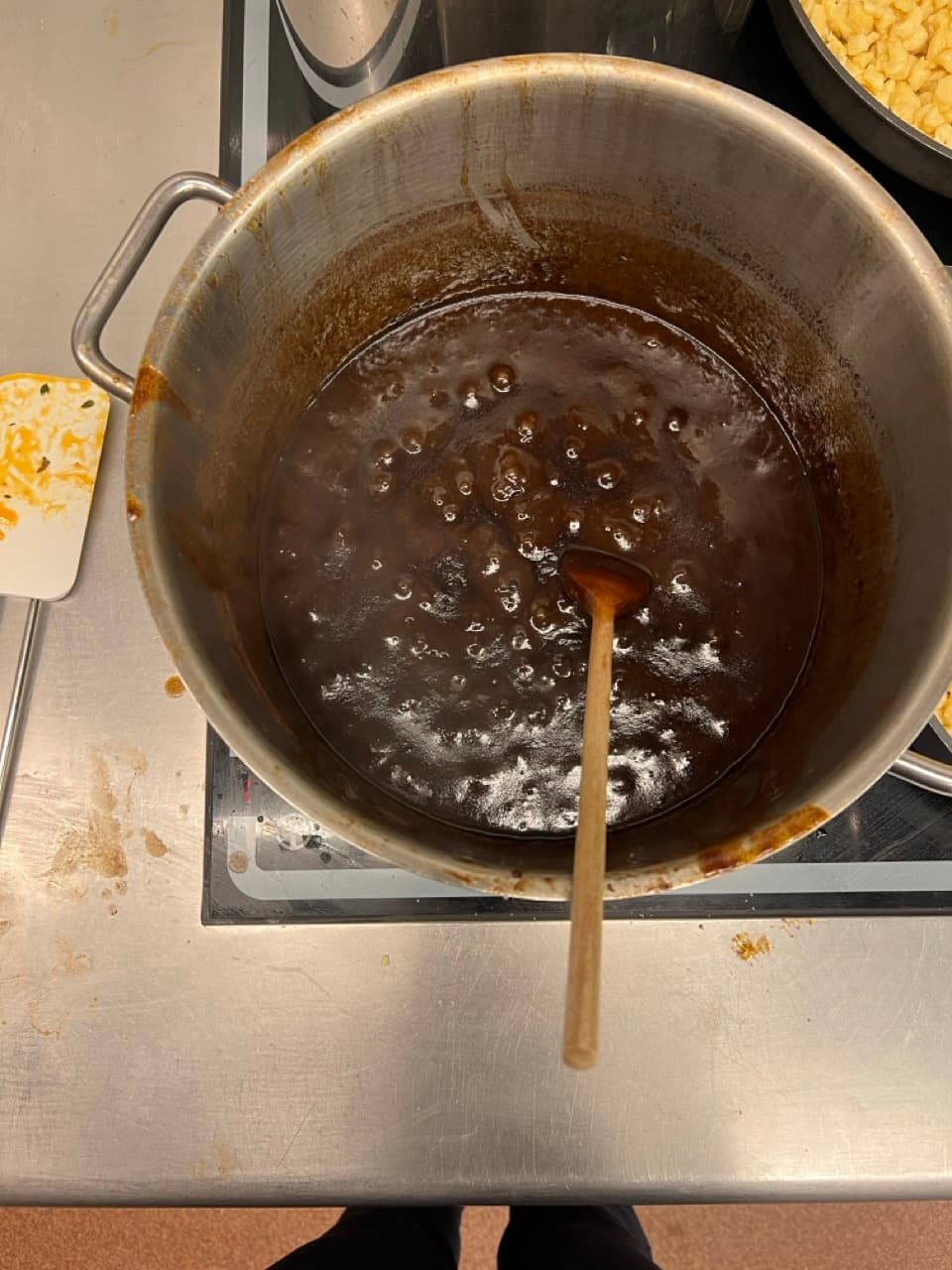
Rich, dark, full-bodied – that’s how I like my sauce. I’m happy to spend half a day at the hob for it. Thank me later.
Making demi-glace myself isn’t something I plan in great detail; it simply comes together from whatever accumulates over the weeks. In the freezer there’s a bag into which everything left over from cooking goes: bones from chops and racks, the green parts of leeks, fennel trimmings, carrot scraps. The best zero-waste recipe! When the bag’s full, it takes half a day to make. This happens two or three times a year, and afterwards the demi-glace is stored in portions in the freezer, and I use it up over the course of months. It’s the sauce that makes all the difference. Because when I don’t have time for a long cook but still want to eat well? A steak and a spoonful of it. It even works on its own as a sauce.
Demi-glace is one of the great basic sauces of classic French cuisine. In Escoffier’s day, it was still thickened with flour; today, the reduction does this all by itself. Bones, root vegetables, tomato purée and wine – that’s almost all there is to it. All the flavour comes from roasting and reducing. And because it’s reduced to a fifth of its original volume by the end, no salt is added: the flavour is so concentrated that it’s easy to oversalt it – it’s all already been reduced. Seasoning is added later, in the dish in which the demi-glace is used.
When it comes to wine, things get a bit unconventional. The demi-glace is made using precisely those bottles that nobody wants to drink anymore: half-empty bottles and wines with a slight corky tinge – corked wine, known in Switzerland as Zapfenwein. What’s a nuisance in a glass disappears completely in the saucepan. After hours on the hob, nothing remains of them except a wealth of flavour. Well worth the effort.
Why you’ll love this dish
- Leftovers can be turned into a stock: bones and vegetable trimmings, which would otherwise end up in the bin, can be used to make a sauce that costs a lot in the shop.
- It’s a one-off effort, but the benefits last for months: when frozen in portions, one batch is enough for countless roast gravies.
- Hardly any hands-on work, lots of waiting: the saucepan is left on the hob on its own for hours and only needs a quick check now and then.
- It saves any sauce: just a spoonful turns pan juices into a sauce with real depth.
- Recycles wines that would otherwise be poured away, including bottles that have gone corky.
Which bones should be used for demi-glace?
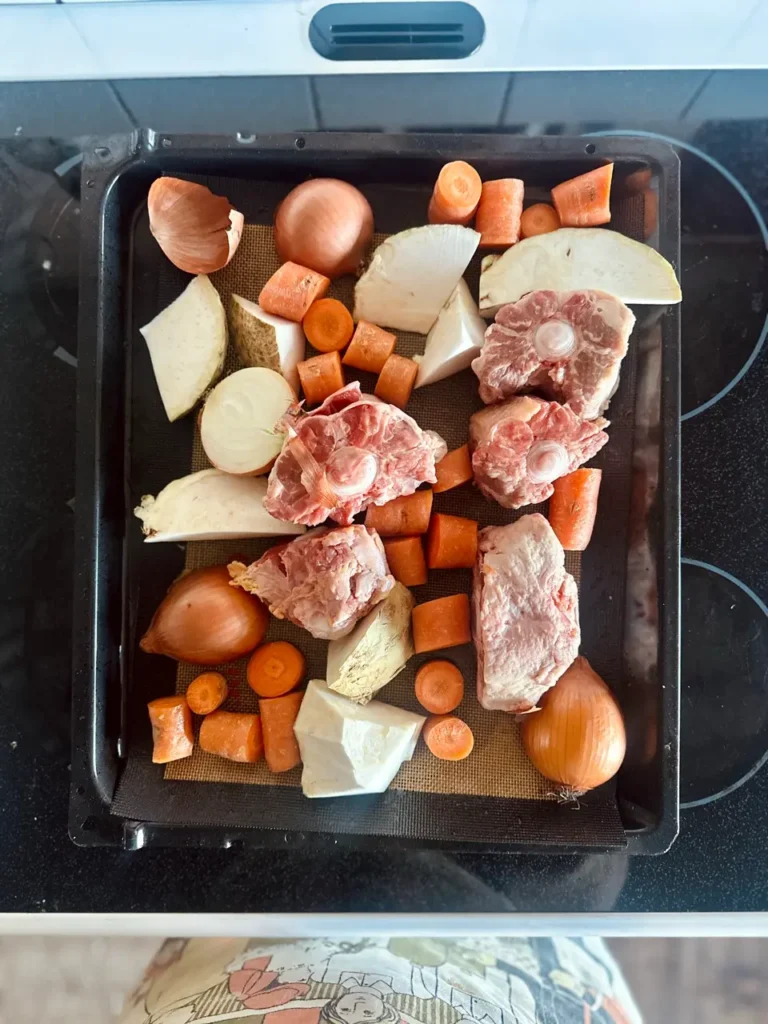
Veal bones are best, as they release a particularly large amount of gelatine, which naturally thickens the sauce without the need for flour or starch. Beef bones work just as well and have a stronger flavour; pork bones will do in a pinch. The most important thing is that they have bits of meat and tendons attached: that’s exactly what gives them their flavour. You can usually get bones cheaply or for free from the butcher, though you often need to order them a day in advance.
I don’t actually go out of my way to buy them; instead, I collect them in the freezer over a period of months. Anything left over after a roast or a chop goes into the same bag. I also add the vegetable trimmings from preparing them: the dark green parts of leeks, fennel stalks, celery scraps and carrot ends. Nothing goes to waste.
Corked wine: bottles nobody wants to drink
Wines with a corky flavour are those that no longer taste right or have a corky tinge. They’re unusable in a glass, but well worth the money in a saucepan. When cooked for a long time, the off-flavour evaporates almost completely, leaving behind acidity, colour and tannins – and that’s exactly what the sauce needs. For two kilos of bones, you’ll need around three litres – that’s four bottles. If you don’t have any corked bottles, use a simple dry red wine: an expensive one would be a waste here.
Professional kitchen vs. my kitchen
In traditional gastronomy, demi-glace is prepared strictly without any fat. During the hours-long reduction process, the stock is meticulously skimmed of fat (degraissé) several times with a ladle, reduced to a pure concentrate, and the ice-cold butter is stirred into the finished sauce (monter au beurre) right at the very end, just before serving.
I make things easier for myself in everyday life and save myself the hassle: I usually don’t even bother carefully skimming off the bone fat floating on top, and I stir the ice-cold butter straight into the large storage pot right at the end of the reduction process. That way, the demi-glace is 100 per cent ready to use for me. When I’m cooking later on, I simply drop a frozen cube straight into the hot pan juices – and there you have it: a velvety, glossy butter sauce, without having to weigh out or whip any more butter. As I use up my stock within two to three months, the freshness isn’t compromised by storage in the freezer. Anyone wishing to adhere strictly to the classical French school of cooking should skim the fat off cleanly after straining, omit the butter when making the stock, and only whisk the sauce together right at the very end on the hob.
The exact quantities are listed on the recipe card at the end of the article.
How to make demi-glace yourself – step by step
It’s best to follow this sequence: first, put the bones in the oven, as they take the longest, and at the same time, roast the vegetables in a pan. Then combine everything and let the hob do the rest. Allow half a day when you’re at home, but don’t need to stand over it.
Roast the bones in the oven
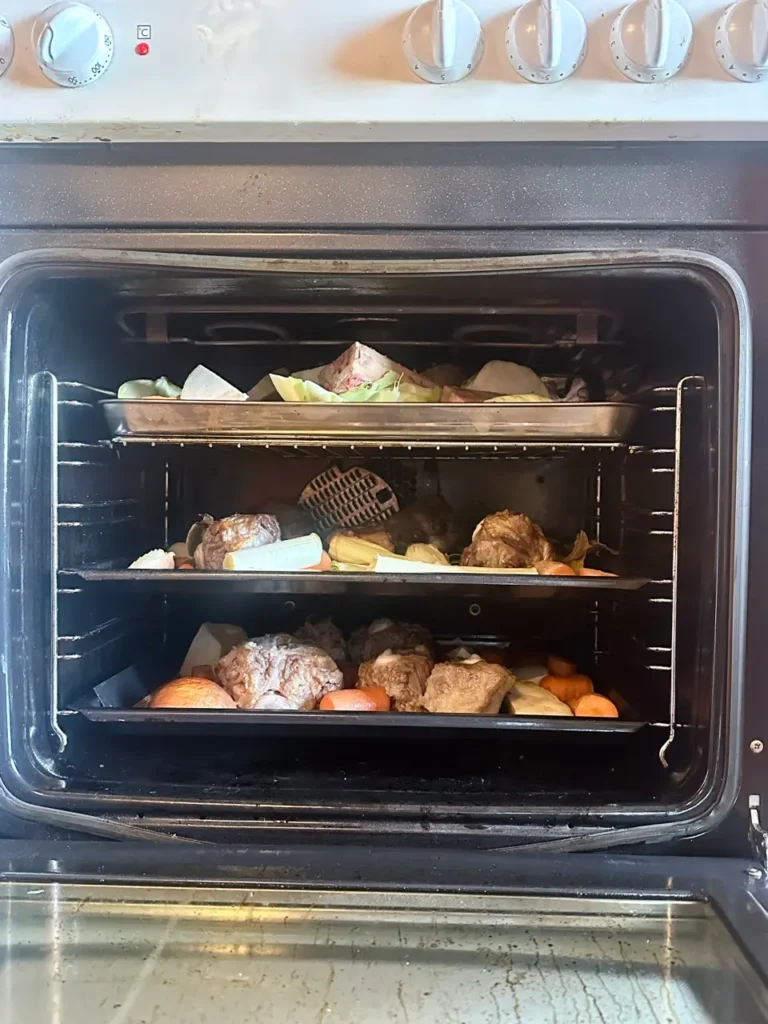
Place the bones in batches on a baking tray and roast them in the oven at 250 degrees (top heat) until they are deep brown. Do not put too many on at once, otherwise they will steam rather than roast. This roasted colour forms the basis for the colour and flavour of the finished sauce.
If you’re using two or three baking trays, swap them round now and then: the top browns faster than the bottom.
Roast the vegetables in the pan
Fry the onions in clarified butter in a very large saucepan. (Alternatively, you can fry them on the baking tray at the same time.) As soon as they are translucent, add the remaining vegetables a little at a time and fry them together. A brown crust may form on the bottom of the pan; this is part of the process and will dissolve later in the wine.
If the coating on the bottom becomes very dark, the heat is too high. A splash of wine will remove it straight away, and you can then carry on toasting.
Fry the tomato purée and deglaze the pan
Add the tomato purée and fry briefly until it changes colour from light red to dark red. Then add the roasted bones to the pan and deglaze with the red wines. If the contents are not yet fully covered, top up with water.
The tomato purée really does need to be fried briefly. If added raw, it remains sour and overpowers everything else.
Leave to simmer for hours
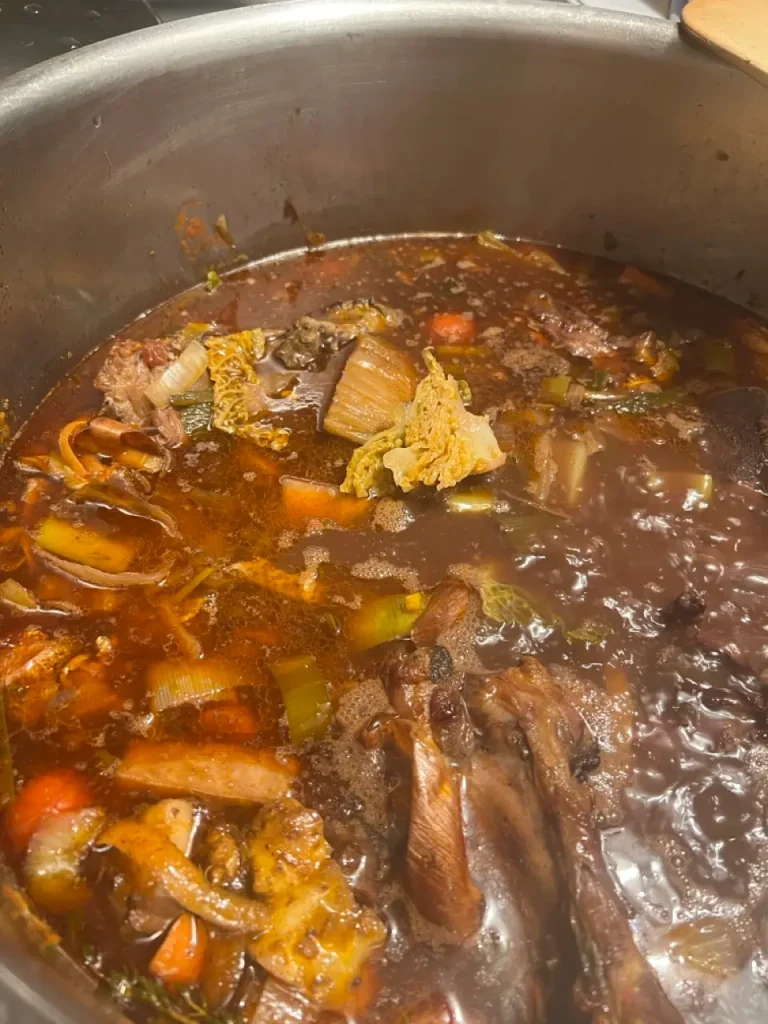
Bring everything to the boil, then leave to simmer gently for 3 to 5 hours. Place the lid on, but at an angle so that steam can escape. The liquid should just be simmering, not bubbling, otherwise the stock will become cloudy.
Strain and reduce to one-fifth
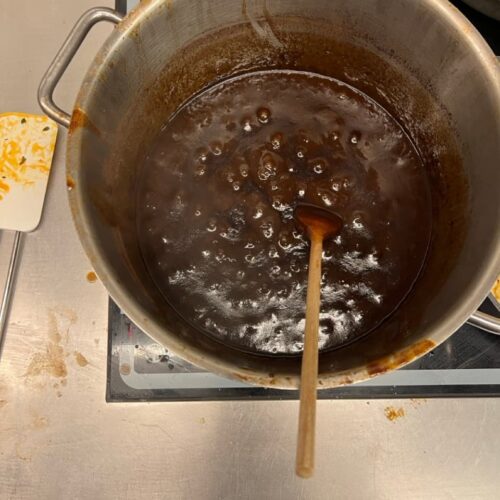
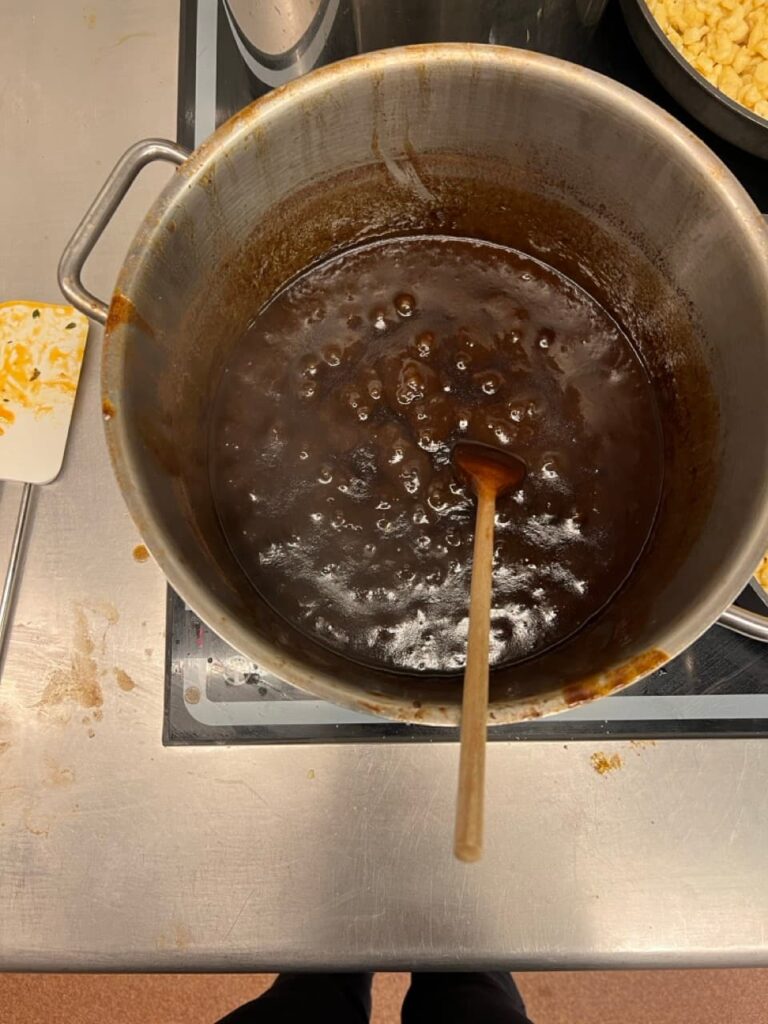
Pour the mixture through a sieve in batches and collect the liquid in a second saucepan. Reduce this liquid to about one-fifth of its original volume. This takes time, but there’s no way to speed it up: it is only through this reduction process that the consistency develops which will later cling to the spoon.
Whip with ice-cold butter
Only right at the very end, when the sauce has reduced to a fifth of its original volume, remove the pan from the highest heat and stir in the ice-cold cubes of butter until the sauce thickens and becomes glossy. Do not add salt: at this stage, the sauce is so concentrated that it does not need any salt.
The butter must be absolutely ice-cold and should only be incorporated, not boiled. If the sauce separates, a splash of cold water and a good stir will help. (I explain further up why I stir the butter into the mixture at this stage rather than later, when preparing the actual sauce.)
Pour into containers and chill
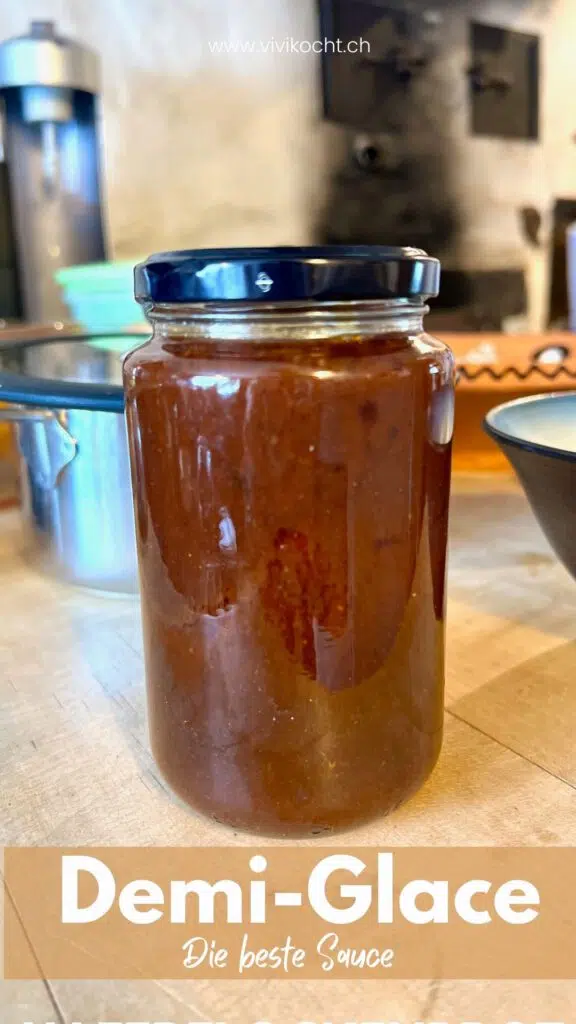
Pour the finished demi-glace into small, sterilised jars or tins and leave to cool. Once cooled, the jars can also be frozen. Small portions are more practical than large ones, as only a few spoonfuls are needed per sauce.
Tips & Variations
Texture and meat alternatives
Instead of veal bones, this recipe also works with poultry bones; the sauce will then be lighter in colour and more delicate, and goes particularly well with chicken. You can replace the juniper and bay leaf with other flavourings, such as thyme or a piece of cinnamon bark. And if you can’t get plain bones, you can use oxtail or shank slices: both contain meat and connective tissue, which also makes the sauce wonderfully creamy.
You can adjust the intensity of the demi-glace to suit your taste by reducing it to varying degrees. If you prefer it even thicker, reduce it until it’s less than a fifth of its original volume. Freezing it in ice cube trays is the most practical option for everyday use.
FAQ on Demi-Glace
In the fridge for about a week, provided it’s stored in a clean container and you always use a clean spoon to scoop it out. Anything you want to keep for longer should go in the freezer: it will keep there for at least three months. It’s best to freeze it in small portions, so you can defrost exactly as much as you need for a sauce.
That depends on how much you reduce it and how many bones were in the pan. As a rule of thumb: what ends up in the jar is about a fifth of the liquid you started with. It’s best to transfer it into small jars – you’ll only need a few spoonfuls per sauce.
Because the flavour is already very intense as a result of the reduction. Salt would tend to dull it rather than enhance it. Seasoning is done later, in the dish in which the demi-glace is used. It also ensures it remains versatile.
Yes, a simple dry red wine works just as well. An expensive one would be a waste here, as hours of cooking would strip it of its delicate flavours. Wine left over from parties is simply the most obvious way to use up bottles that would otherwise be thrown away.
As a base or flavour enhancer for roast gravies: stirring a spoonful into the pan juices immediately adds depth. It goes well with stews, seared meat and even poultry. It also works well in a pasta sauce or in a risotto.
More delicious recipes
- Sauerbraten – so delicious: beef marinated in red wine for four days, served with a sauce thickened with brown bread
- Bolognese sauce: minced meat simmered for hours with wine and milk, creamy and full of roasted flavours
- Crispy chicken in Vin Jaune with morels: crispy skin, served with a cream sauce containing morels and Vin Jaune from the Jura, which is reminiscent of sherry
Please do feel free to leave me a comment – I’m always delighted to hear from you!
You can also find me on Instagram, Facebook, TikTok and YouTube to get a glimpse behind the scenes of my blog.
Recipe Card
This recipe card contains Amazon affiliate links. As an Amazon affiliate, I earn a commission on qualifying sales. However, this won’t affect the price you pay.
How to make demi-glace
Equipment
- 1 very large pot
- 1 Baking tray
- 1 fine sieve
Ingredients
- 2 kg veal bones or beef or pork bones
- 300 g fennel diced
- 300 g carrots diced
- 200 g onions diced
- 300 g celeriac diced, or celery stalks
- 3 bay leaves
- 3 juniper berries
- 200 g tomato purée
- 3 l corked wine or a simple dry red wine
- 50 g clarified butter
- 200 g butter ice-cold, for finishing
Instructions
- Roast the bones in batches in the oven at 250 °C top heat until deep brown.
- Fry the onions in clarified butter in a very large pot. Once translucent, add the remaining vegetables bit by bit and roast along. A brown layer may form on the bottom of the pot.
- Add the tomato purée and roast briefly until it darkens. Add the roasted bones and deglaze with the red wine. Top up with water if needed.
- Bring to the boil and simmer gently for 3 to 5 hours. Set the lid on at an angle so steam can escape.
- Pour the contents through a sieve in batches, collecting the liquid in a second pot. Reduce this to about a fifth.
- Only right at the end, once the sauce has reduced to a fifth, take the pot off the highest heat and stir in the ice-cold butter cubes until the sauce thickens and turns glossy. Do not salt: at this point the sauce is so concentrated that it needs none.
- Fill into sterilised small jars or tins and leave to cool. Once cooled they can also be frozen.
Notes
- Do not add salt. If the sauce has been properly reduced, it doesn’t need any, and it stays versatile that way.
- Keeps about a week in the fridge, always take it out with a clean spoon. At least three months in the freezer, best frozen in small portions.

Leave a Reply