

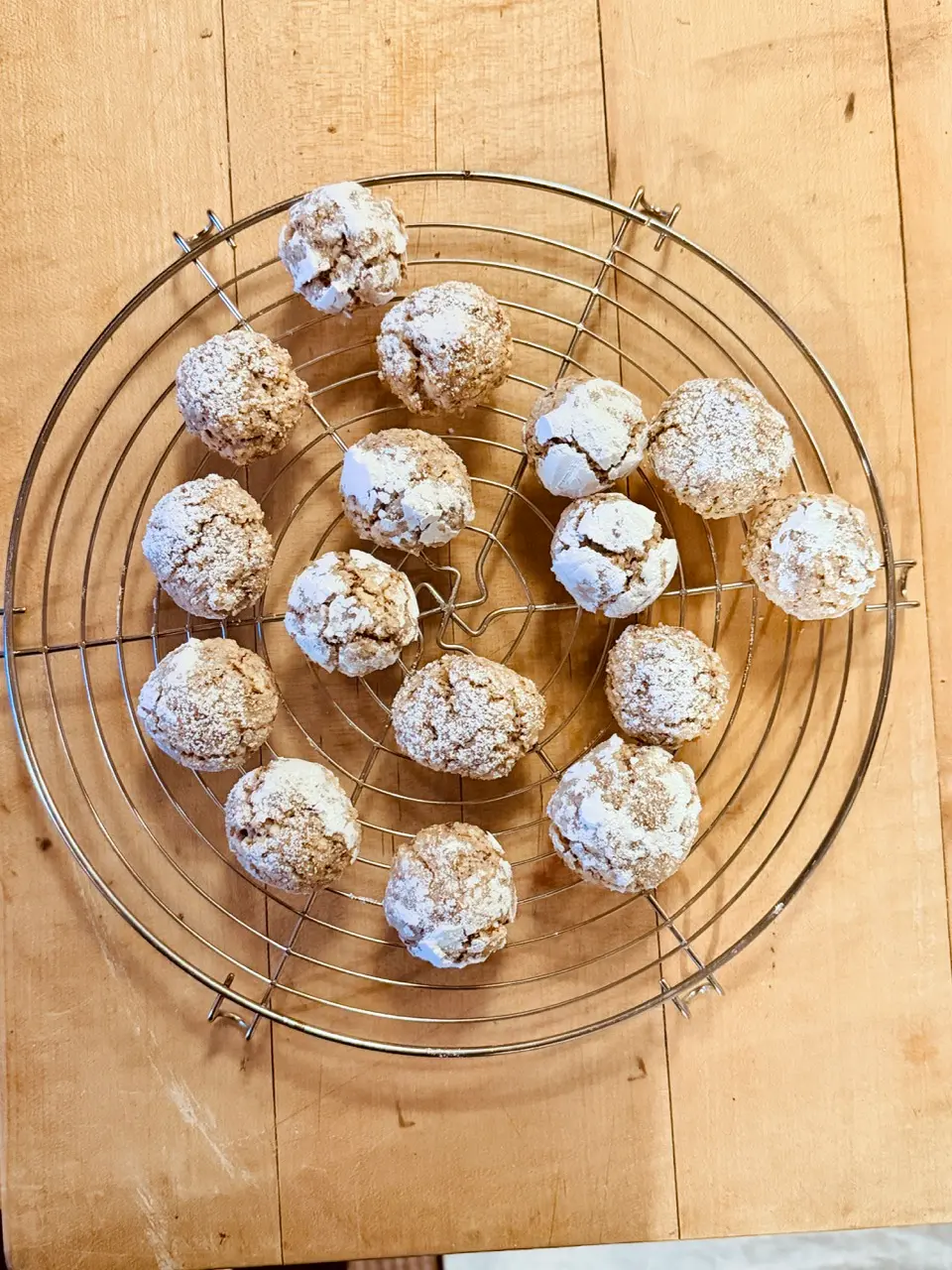
Amaretti had been at the very top of my biscuit list for ages, yet every year I’d end up pushing them further down the list. I’ve no idea why. They’re so simple to make and ready in 35 minutes. All you need is almonds, sugar, egg whites and the courage to take them out of the oven a bit earlier.
The difference between soft and hard amaretti does not lie in the list of ingredients, but in two aspects. The almonds must be blanched and ground very finely; otherwise, the mixture will be coarse rather than delicate. And the egg whites must not be whipped too stiffly: as long as they remain glossy and creamy, they will bind in the moisture rather than releasing it again in the oven.
Amaretti originate from northern Italy, and you can find two varieties in the shops. Amaretti secchi are dry and crisp; the best-known are the Amaretti di Saronno from Lombardy, which are the only ones traditionally baked with apricot kernels rather than almonds. Amaretti morbidi are the soft variety, lighter in colour and moist on the inside, and are best known from Sassello in Liguria. ‘Morbido’ means soft, ‘secco’ means dry, and that’s really all you need to know about the difference. This recipe makes the soft ones.
Why you’ll love this Recipe
Amaretti are small Italian almond biscuits made from ground almonds, sugar and egg whites, with just one and a half tablespoons of flour and no butter. From the first bowl to the finished tray it takes 35 minutes, 20 of which are baking time. This recipe makes the soft kind, the amaretti morbidi: blanched, very finely ground almonds and egg whites whisked only to a creamy peak keep the inside moist.
- Five basic ingredients that are usually in the cupboard anyway: almonds, sugar, flour, egg whites, salt.
- No rolling, no cutting out, no chilling time: the mixture is simply shaped into balls by hand.
- Two leftover egg whites find a use here that doesn’t feel like using up leftovers.
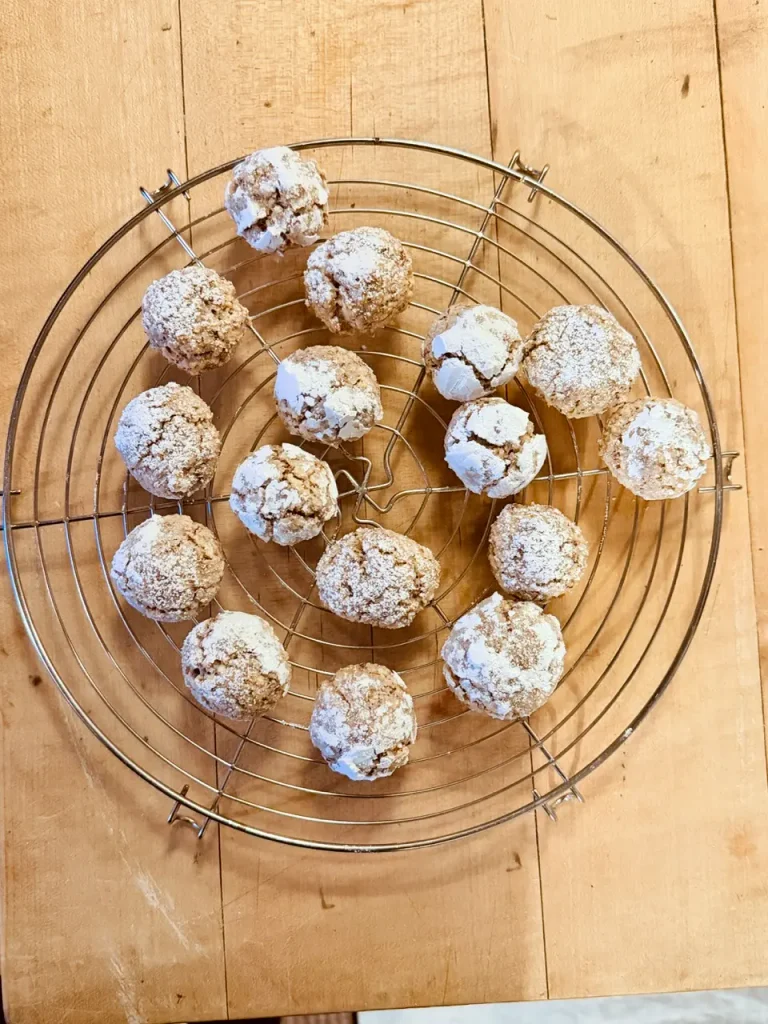
- The icing sugar coating cracks open while baking and gives the amaretti their typical craquelé.
- They belong on any Christmas biscuit plate and work just as well beside an espresso or a glass of dessert wine.
For a small dessert, dip the bases in melted chocolate.
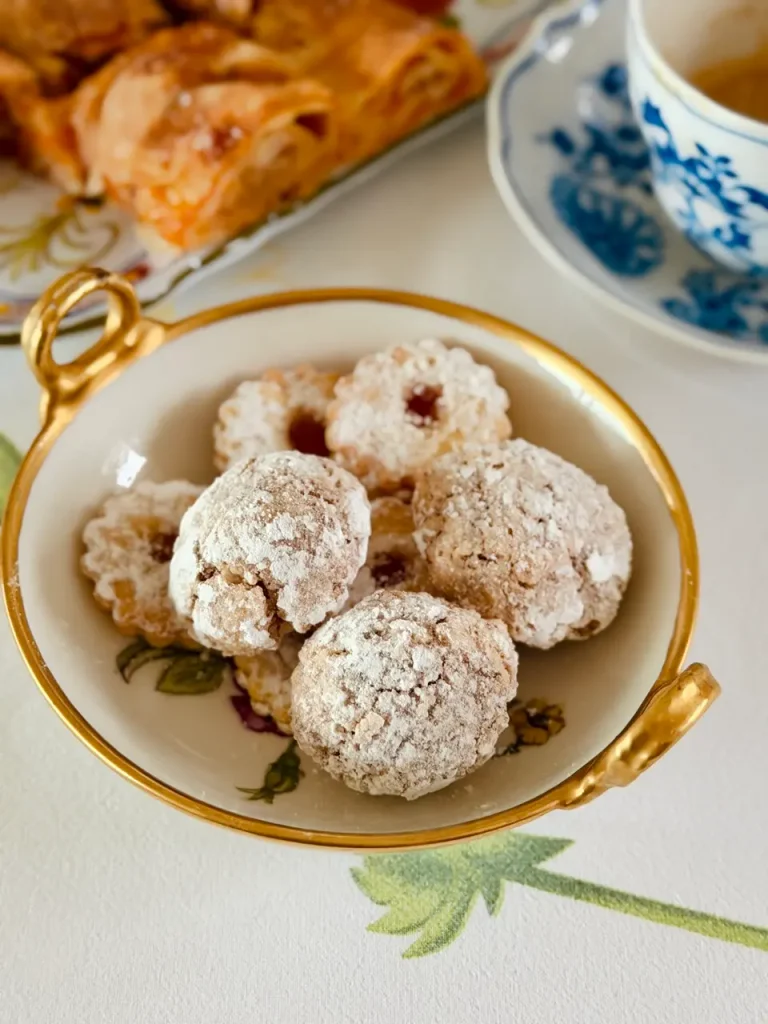
Which almonds for amaretti?
What matters is blanched, peeled almonds, ground very finely. The brown skin of unpeeled almonds makes the mixture darker and slightly coarse, and tenderness is the whole point of soft amaretti. Ready-ground almonds from the shop are often coarser than they look: pass them through a sieve once, grind the residue again, and the mixture becomes noticeably finer.
For an even finer crumb, use icing sugar instead of granulated sugar.
How to make Amaretti – Step by Step
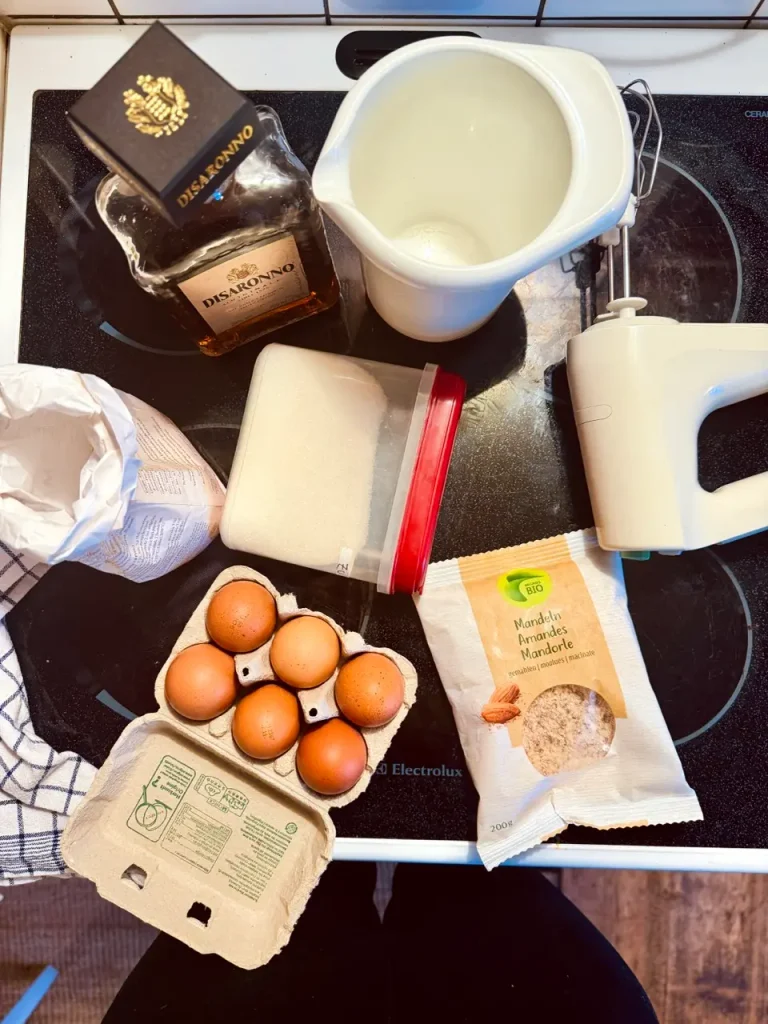
The sequence is short: first the dry ingredients with the amaretto, then the egg whites, then shaping and straight into the oven. Nothing needs to chill, so it pays to line the trays with baking paper and switch the oven on in good time.
Mix the almonds, sugar and flour
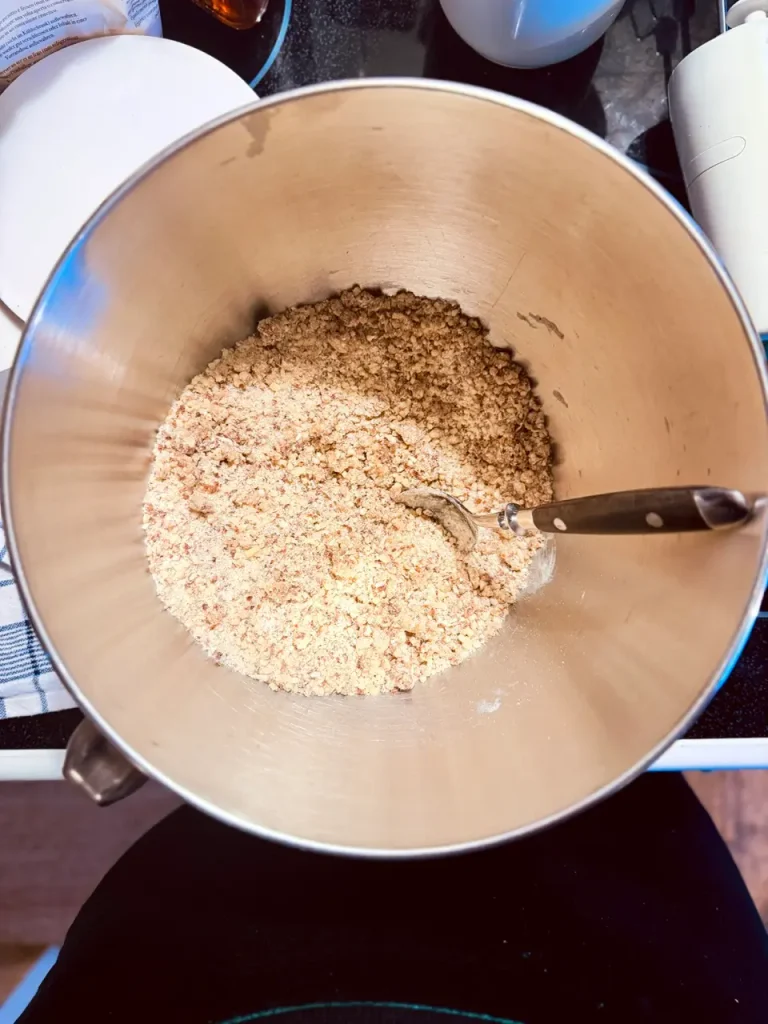
Mix the almonds, sugar and flour thoroughly in a bowl. Drizzle the amaretto over the top, add the honey or citrus zest if using, and stir briefly to a crumbly mixture.
Whisk the egg whites to a creamy peak
Whisk the egg whites with the pinch of salt until stiff, but no longer. The egg whites only bind the moisture while they still look glossy.
When the whisk is lifted out, a peak should form that still folds over slightly at the tip. If the egg whites look matt and break into flakes, they have gone too farand the almond mixture will no longer hold the moisture.
Bring the dough together
Fold the egg whites carefully into the almond mixture until a smooth, slightly sticky dough forms. If it is still too soft to shape, leave it to stand for 10 minutes so the almonds can swell.
Shape the balls and roll them in icing sugar
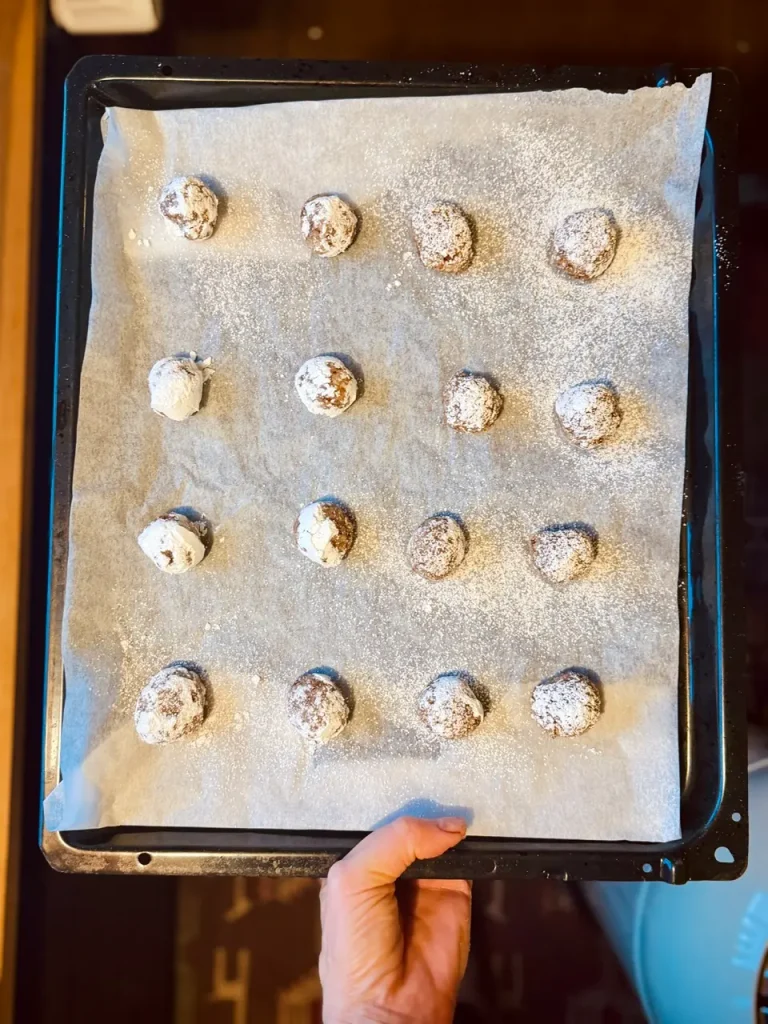
Line two baking trays with baking paper. Moisten your hands lightly with cold water so nothing sticks, then shape walnut-sized balls from the mixture. Roll them generously in the icing sugar straight away, shake off only very lightly and place them on the trays with a little space between them.
Roll each ball immediately rather than shaping them all first. If the surface sits for a few minutes it dries slightly and the icing sugar only sticks in patches.
Bake at a low temperature
Preheat the oven to 130 °C / 265 °F fan (150 °C / 300 °F conventional). Bake the trays in the middle of the oven for 16 to 20 minutes. As soon as the surface cracks slightly but the amaretti are still pale on top and give noticeably under light finger pressure, take them out immediately. They firm up as they cool.
Leave to cool
Leave the amaretti to cool completely on the tray, as they are still very fragile while warm. Then transfer them to a tightly sealing tin so they stay soft.
Dip the bases in chocolate (optional)
Melt dark chocolate over a water bath. Dip the underside of the completely cooled amaretti briefly into the chocolate, let the excess drip off and set them base-side up on baking paper until the chocolate has set. About 80–100 g dark chocolate (70% cocoa solids) needed.
Tips & Variations
- If they turn out firm: If the amaretti are hard once cooled, put a piece of apple or a strip of lemon peel in the tin with them and they will soften again a little overnight.
- Dust again before serving: Some of the icing sugar sinks into the surface while baking. Sift a little fresh icing sugar over them just before serving.
For variations: Dip the bases of the cooled amaretti into melted dark chocolate and leave them to set on baking paper.
FAQ for amaretti
Amaretti turn hard when they bake for too long or when the egg whites have been whisked too stiffly. At 130 °C / 265 °F fan, 16 to 20 minutes is enough, and they need to come out while they are still pale on top and give under finger pressure. They firm up as they cool.
Amaretti also work without amaretto: 2 to 3 drops of bitter almond essence replace the liqueur and bring the typical almond flavour. Without the liqueur a little liquid is missing, and a teaspoon of honey or water makes up for it.
Amaretti are done when the icing sugar coating has cracked open but the surface is still pale and gives noticeably under light finger pressure. If they already feel firm in the oven, they will be too dry once cooled.
Amaretti keep for 1 to 2 weeks at room temperature in a tightly sealing tin and stay soft.
More delicious recipes
Please do feel free to leave me a comment – I’m always delighted to hear from you!

You can also find me on Instagram, Facebook, TikTok and YouTube to get a glimpse behind the scenes of my blog.
Recipe Card
This recipe card contains Amazon affiliate links. As an Amazon Associate, I earn from qualifying purchases. The price you pay stays exactly the same.

Leave a Reply