
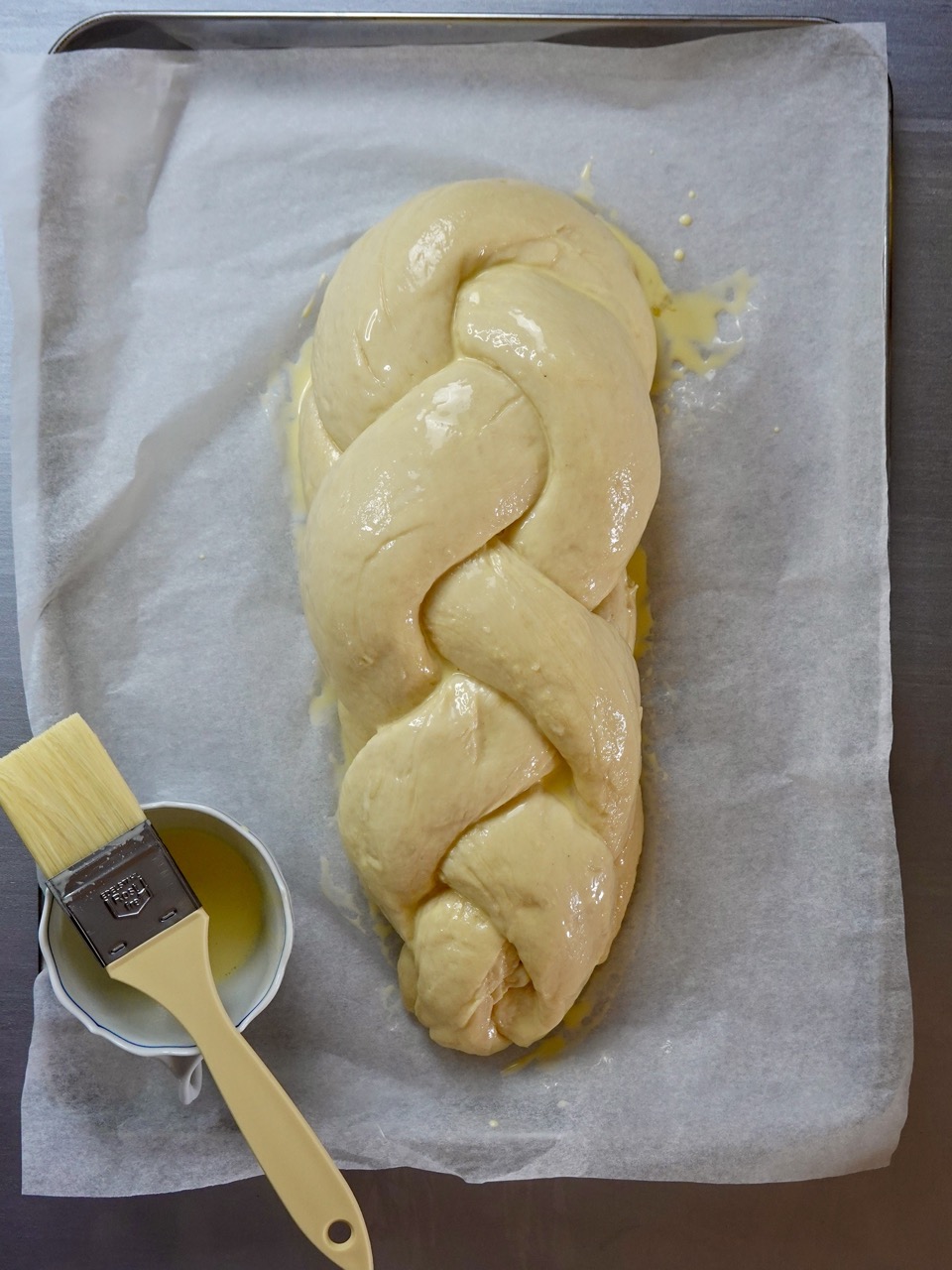
Sunday morning, the smell of freshly baked bread in the kitchen, and right in the middle of the table, a golden-brown, glossy braided loaf. When I don’t have time for the classic four-strand version, I turn to this very recipe: a quick braided loaf made with just two strands, which still looks every bit the part on a Sunday. To be honest, the dough almost got the better of me once on a hot summer’s morning; the soft butter in the dough got so warm that the braid tried to slip away from me as I was shaping it. Since then, I’ve known exactly how to keep it under control, even in the heat.
What makes this quick braid so straightforward is that the two-strand braid is the most beginner-friendly braiding technique of all, and you’ll almost always have the ingredients to hand. Flour, yeast, butter, milk, an egg yolk – that’s all you need. And don’t be put off by the word ‘quick’: the yeast needs a good hour to rest, during which the dough does all the work by itself. The actual hands-on work is done in just a few minutes. Brushing the top with egg yolk just before baking ensures that it ends up with that typical shiny, golden-brown crust.
In Switzerland, the Zopf – often called a ‘Butterzopf’ or ‘Sonntagszopf’ – has been a staple on the breakfast table for generations. This quick version brings exactly that same feel to the table, only with a little less effort.
Why You’ll Love This Recipe
- Just a handful of basic ingredients you almost always have at home: flour, yeast, butter, milk and an egg yolk.
- The two-strand braid is the easiest braiding technique and works even on your first try.
- Little active work: most of the time is proving time, while the dough rises on its own.
- A glossy, golden crust from the egg-yolk glaze, soft and fluffy inside.
- Can be prepared the evening before and baked fresh in the morning.
Which Flour for the Quick Braided Bread?
With a Zopf, the flour mostly decides the crumb. The classic choice is Zopfmehl, a Swiss speciality blend made for yeast bakes that keeps the dough elastic and gives a fine, fluffy crumb. If you cannot get Zopfmehl, a strong wheat flour with a high gluten content works too (both are listed in the recipe). The crumb turns out a touch less airy, but the braid still succeeds reliably. Everything else is a basic ingredient that needs no special choice.
The exact quantities are listed in the recipe card at the end of the article!
How to Make the Quick Braided Bread – Step by Step
The order pays off like this: first make the dough, then use the long proving time, braid, let it rest briefly and bake. Only the proving needs patience, everything else is quick.
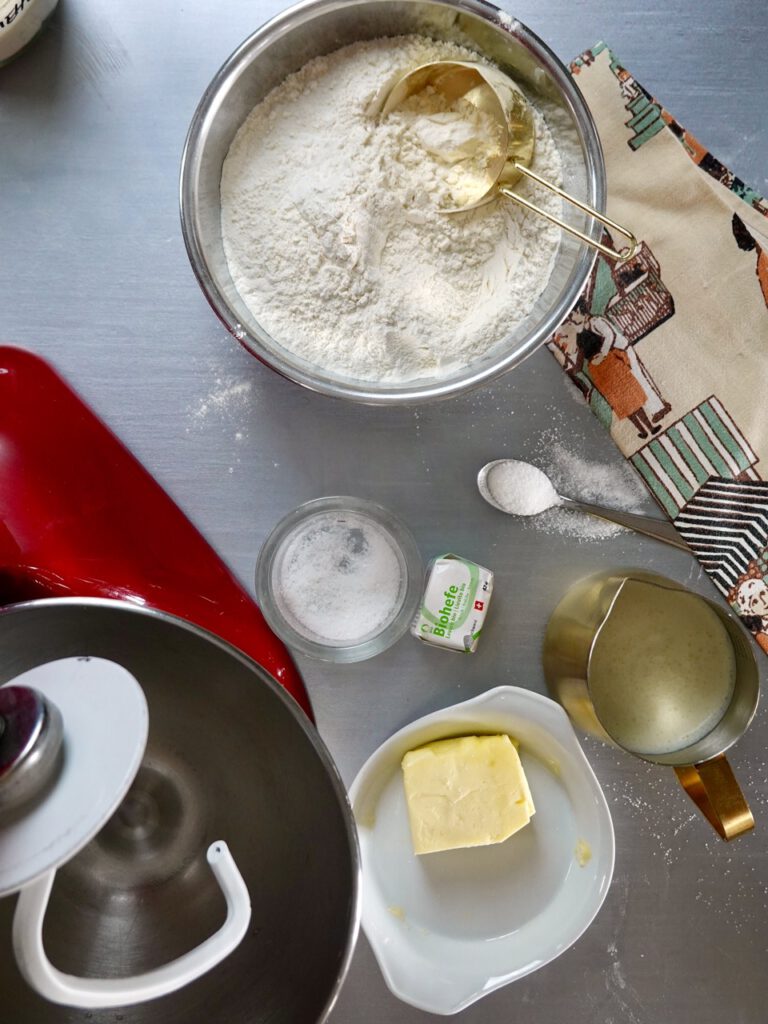
Prepare the yeast dough
Crumble the yeast into the lukewarm milk and let it stand briefly to dissolve. Then combine with the flour, butter, salt and sugar in a bowl and knead everything into a soft, smooth dough.
The milk should only be lukewarm, not hot. Milk that is too hot kills the yeast and the dough will not rise.
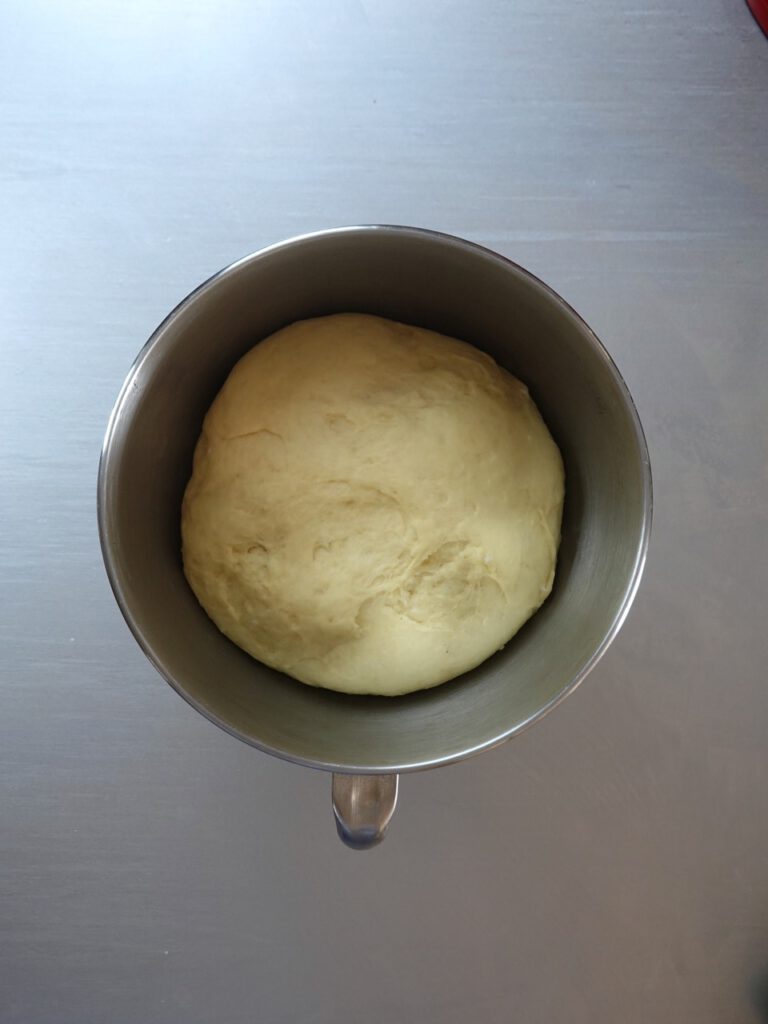
Let the dough prove
Cover the dough and let it prove at room temperature for approx. 1½ hours, until it has doubled in volume.
A warm, draught-free spot helps. The dough is ready when a dent pressed with a finger springs back only slowly.
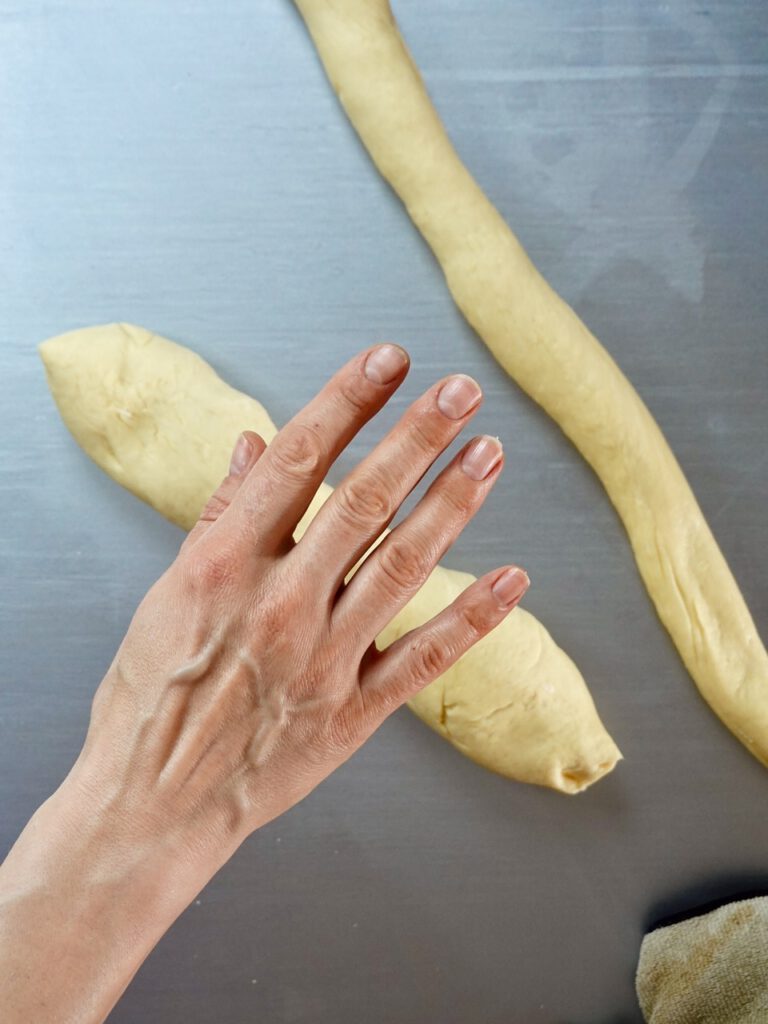
Braid the Zopf
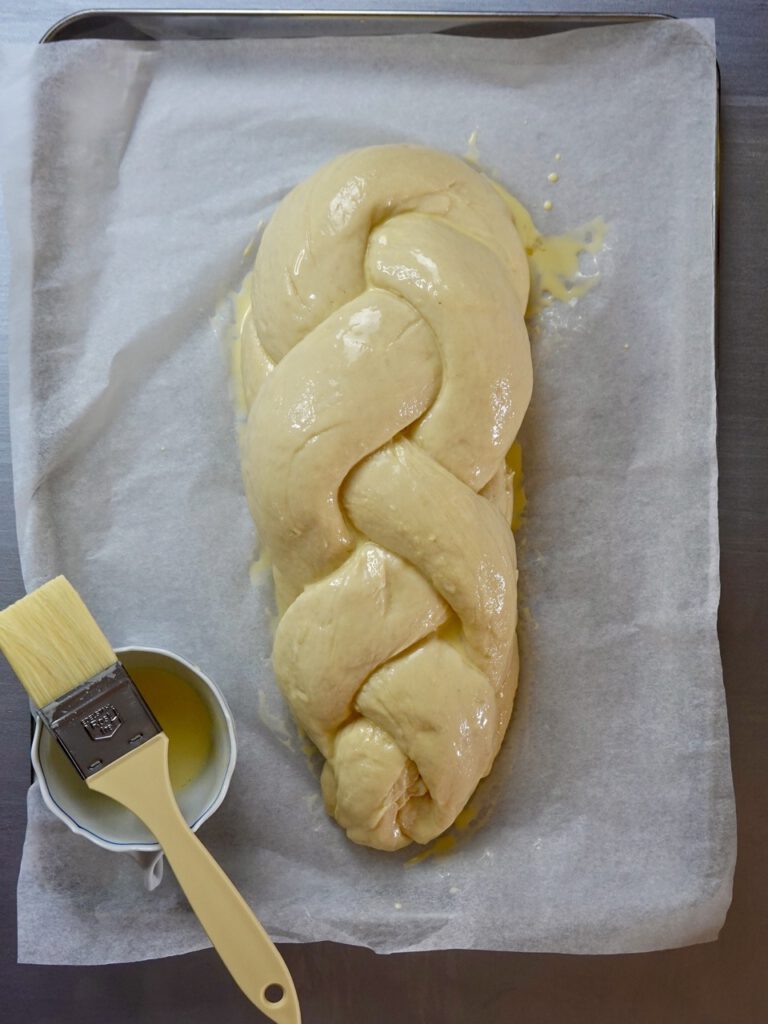
Divide the dough into two equal portions and roll each into a strand about 60 cm (24 inches) long, tapering slightly at the ends. Place the two strands across each other in a plus-sign shape. Rather than simply twisting the strands, braid them by alternating: first, bring both ends of the bottom strand over the top strand to the opposite side. Then repeat the process with the ends of the other strand. Continue this way step by step until reaching the end, pinch the ends firmly together, and tuck them slightly underneath the loaf. Transfer the braided loaf to a baking sheet lined with parchment paper and let rest for about 30 minutes. If the strands taper towards the ends, the braid stays even and will not spread apart in the middle.
Preheat the oven
Preheat the oven to 200 °C / 390 °F (conventional top and bottom heat).
Glaze the Zopf
Whisk the egg yolk with a tablespoon of milk or cream and brush it evenly over the braid. This gives the lovely golden, glossy crust.
Apply a thin, even layer. If the glaze pools in the braid grooves, it leaves dark spots while baking.
Bake the Zopf
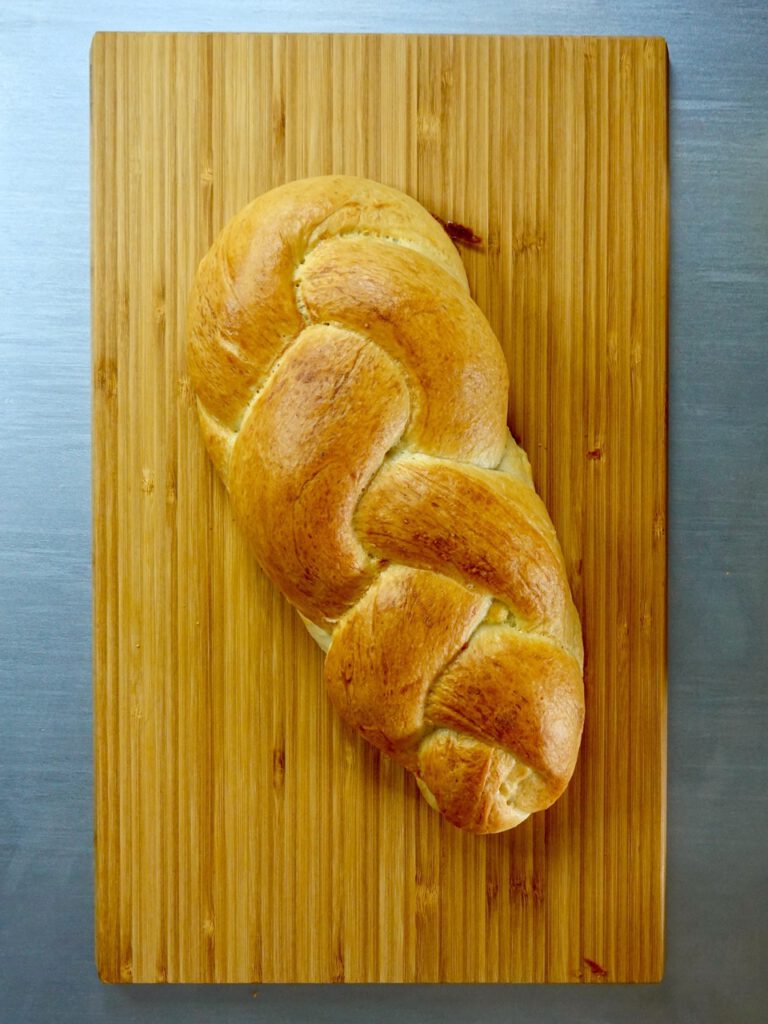
Bake the braid in the lower half of the oven for approx. 35 minutes, until golden brown. If the surface browns too quickly, loosely cover the braid with foil towards the end of the baking time.
To check if it is done, tap the base: if it sounds hollow, the braid is ready.
Cool the Zopf
Take the finished braid out of the oven and let it cool on a wire rack. Best enjoyed fresh.
Tips & Variations
| Tip for hot summer days: When the kitchen gets warm, the soft butter dough tends to spread and the braid loses its shape while baking. Three tricks help: use cold flour and milk, take the butter cool straight from the fridge, and before baking place the finished braid on its tray in the fridge for 15 minutes. That keeps the dough firm and the braid intact. |
The braid is easy to vary: for a sweeter version, work a handful of raisins into the dough before shaping. For a bit of crunch, scatter pearl sugar or flaked almonds over the glazed braid just before baking. For an extra-deep shine, brush the braid a second time once the first layer has dried slightly. It tastes best fresh with a little butter and jam.
FAQ for the Quick Braided Bread
Usually it comes down to the yeast or the temperature. The milk must be only lukewarm, as milk that is too hot kills the yeast. The dough also needs enough time in a warm, draught-free spot until it has doubled in volume.
Yes. Put the kneaded dough into a large bowl, cover with a lid and let it rest in the fridge overnight. The next day, take the bowl out about 1½ hours before baking, let the dough come to room temperature in a warm spot for an hour, then braid.
Whisk the egg yolk with a little milk or cream and apply it thinly and evenly. If you like, brush the braid a second time once the first layer has dried.
It is best fresh on baking day. Wrapped in a cloth or bag it stays good at room temperature for 2 to 3 days, though it gets drier over time. Toasted briefly or refreshed in the oven it tastes like new again. Frozen in portions it keeps for about 1 month.
More Recipes You Might Like
- Moist marble cake – simple and incredibly delicious
- The best lemon ice cream – easy to make at home
- Grandma’s lemon cake
Please do feel free to leave me a comment – I’m always delighted to hear from you!

You can also find me on Instagram, Facebook, TikTok and YouTube to get a glimpse behind the scenes of my blog.
Recipe Card
This recipe card contains Amazon affiliate links. As an Amazon Associate, I earn from qualifying purchases. The price you pay stays exactly the same.
Quick Braided Bread (Swiss Zopf)
Equipment
- Baking tray
- baking paper
- Pastry brush
- Wire rack
Ingredients
- 500 g wheat flour or Zopfmehl Swiss braid flour
- ½ cube fresh yeast 1 sachet dried yeast or
- 1.5 tsp salt
- 1 tsp sugar
- 60 g butter diced
- 300 ml milk
- 1 egg yolk
- 1 tbsp milk or cream for brushing
Instructions
- Crumble the yeast into the lukewarm milk and let it stand briefly. Then combine with the flour, butter, salt and sugar in a bowl and knead into a soft, smooth dough.
- Cover the dough and let it prove at room temperature for approx. 1½ hours, until doubled in volume.
- Divide the dough into two equal portions, shape each into a strand about 60 cm long and braid them together. Place on a baking tray lined with baking paper and let rest for another approx. 30 minutes.
- Preheat the oven to 200 °C / 390 °F (conventional top and bottom heat).
- Whisk the egg yolk with 1 tbsp milk or cream and brush it evenly over the braid.
- Bake in the lower half of the oven for approx. 35 minutes until golden brown. If it browns too quickly, cover loosely with foil.
- Let cool on a wire rack and enjoy fresh.
Video
Notes
- Make ahead: rest the kneaded dough covered in the fridge overnight, take it out about 1½ hours before baking, bring to room temperature for an hour, then braid.
- Hot-day tip: use cold flour and milk, take the butter cool from the fridge and chill the shaped braid on its tray for 15 minutes before baking so the butter dough stays firm.
- Storage: wrapped in a cloth at room temperature for 2 to 3 days. Frozen in portions for about 1 month.




Leave a Reply