
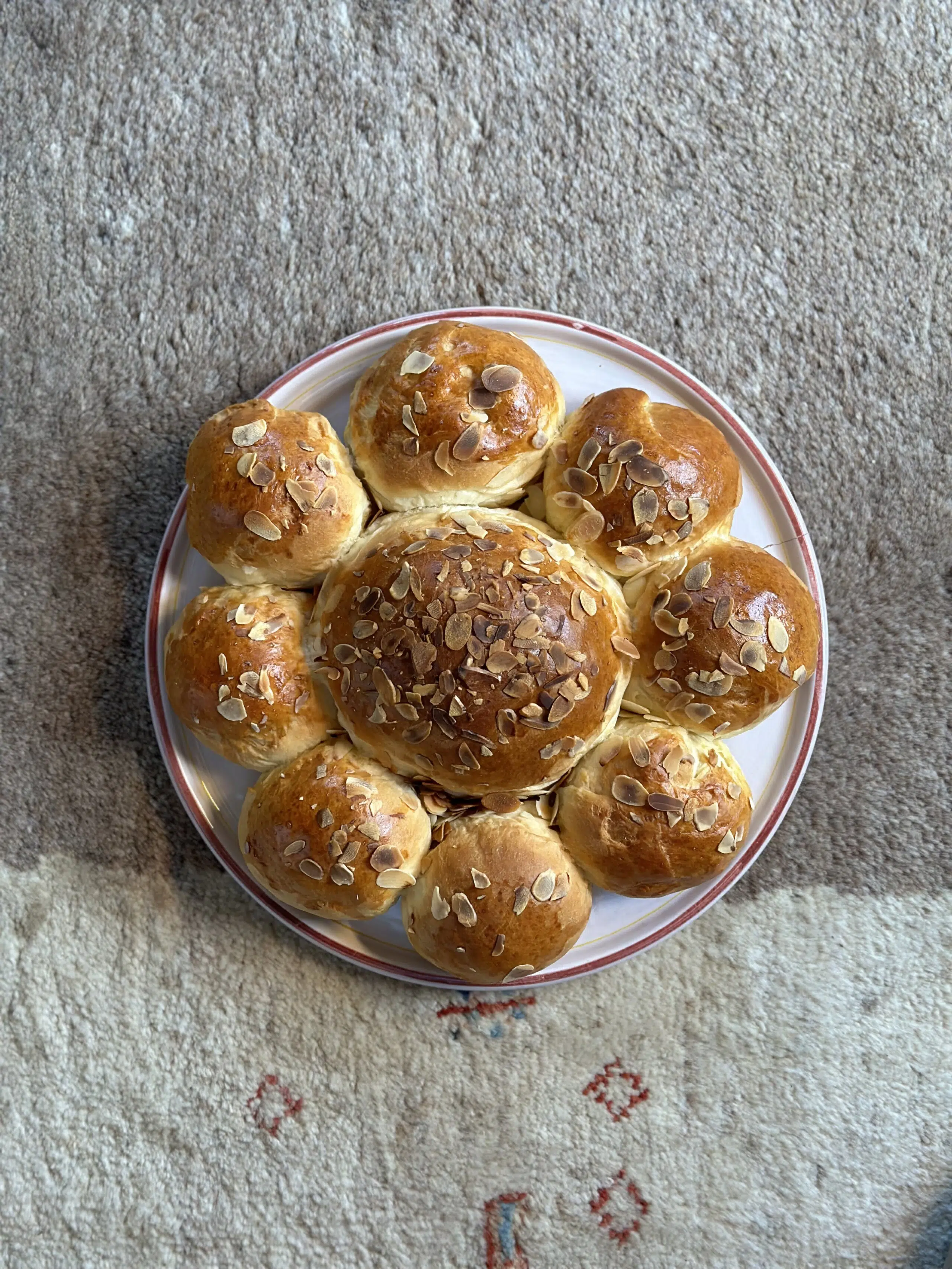
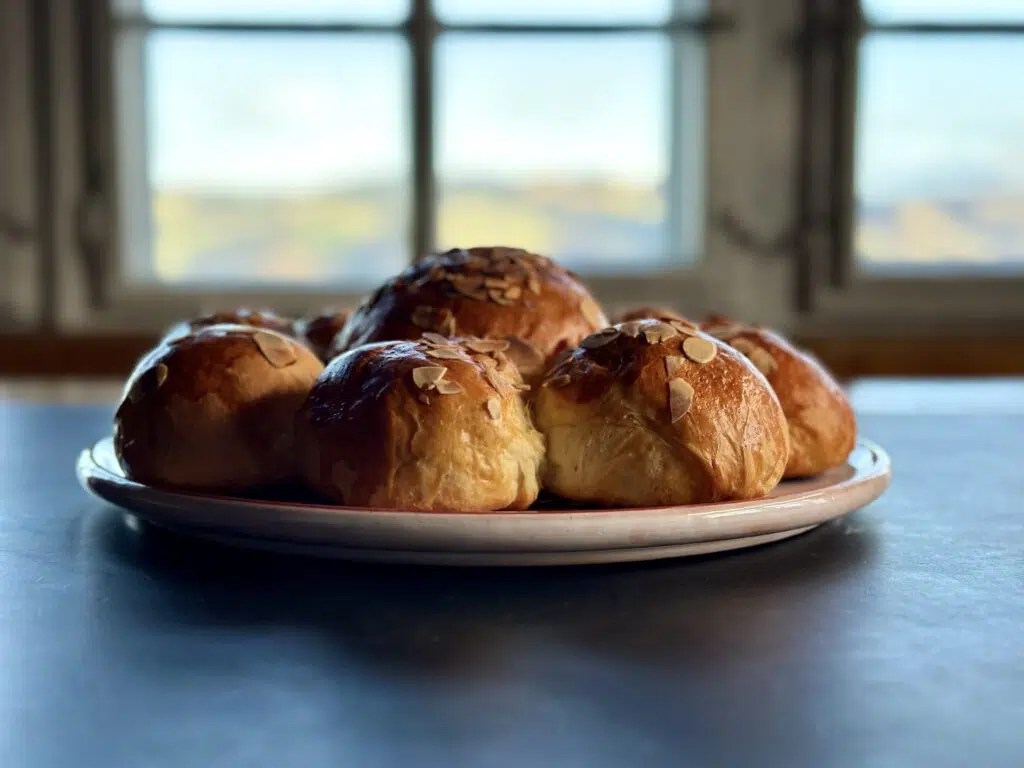
The Three Kings Cake is a Swiss speciality and is an integral part of 6 January, Epiphany. The Swiss Three Kings’ Cake, also known as the King’s Cake, is a traditional festive pastry made from light, slightly sweet yeast dough, enriched with sultanas or chocolate and decorated with coarse sugar and almonds.
Inside lies a little surprise – nowadays, usually an almond. As the cake is shared out, everyone hopes to find it, for whoever discovers the almond is crowned queen or king for the day. A lovely custom that brings family and friends together around the table and makes the start of the year festive and cosy. This recipe shows how to make the Three Kings’ Cake with ease and keep the tradition alive in style.
Ingredients for the Three Kings Cake
- 500 g plain flour
- 2 tbsp honey
- 1.5 tsp salt
- 30 g fresh yeast
- 290 ml whole milk, lukewarm
- 90 g softened butter
- 90 g sultanas or chocolate chips (optional)
- 30 g flaked almonds
- 1 egg (size M, for glazing)
- 1 tbsp coarse sugar
- 1 almond to hide
Preparation
Mix the flour, honey and salt in a large bowl. Dissolve the yeast in about 50 ml of the lukewarm milk. Add the remaining milk and the softened butter to the flour and knead everything for 5–8 minutes until you have a smooth, elastic dough.
Tip: The dough should be soft but come away easily from the sides of the bowl.
Leave the dough, covered, to rise at room temperature for about 60 minutes until it has doubled in size.
Tip: A warm, draught-free place ensures even rising.
Soak the sultanas in hot water for 30–60 minutes, then drain them thoroughly. Alternatively, prepare the chocolate chips. Gently knead the filling into the dough. Or simply knead the dough and then continue with the next step
Tip: Sultanas make the cake moister, whilst chocolate adds a dessert-like touch.
Cover the dough again and leave it to rise until doubled in size for 30–45 minutes. This second proving makes the cake particularly light and fluffy.
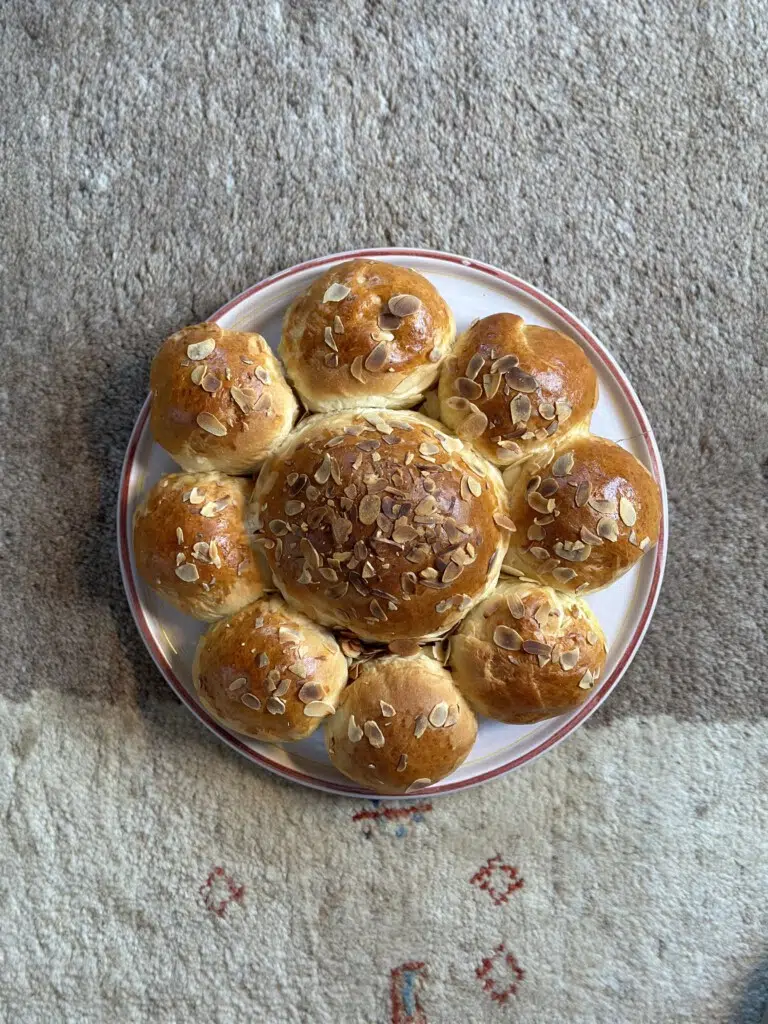
Shape a quarter of the dough into a ball and place it on a baking tray lined with baking paper. Divide the remaining dough into 8 equal pieces, shape them into balls, and press an almond firmly into one of them. Ensure the almond is completely enclosed within the dough.
Arrange the dough balls close together around the central ball. Cover with a damp cloth and leave to rest for 15 minutes. This will ensure the balls retain their shape during baking.
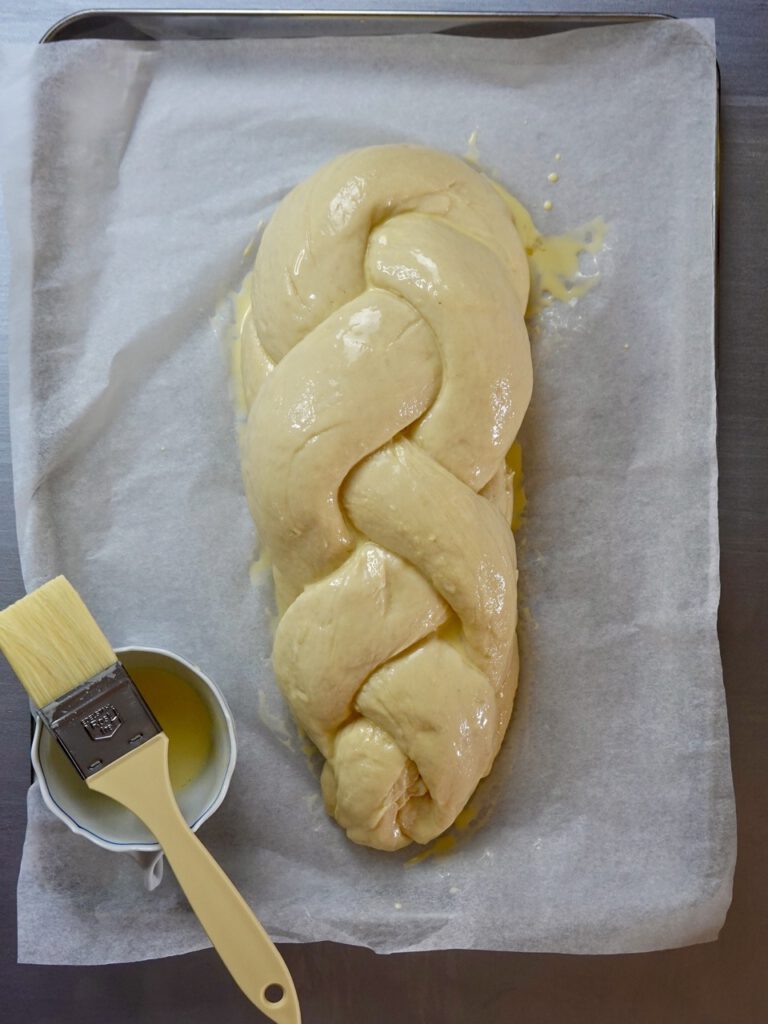
Brush the cake with beaten egg and sprinkle with flaked almonds and coarse sugar as desired. For extra shine, brush the egg carefully into the crevices.
Bake in an oven preheated to 200 °C (top and bottom heat) on the second shelf from the bottom for 20–25 minutes until golden brown. Leave to cool on a wire rack. Tip: If they brown too quickly, cover loosely with baking paper.
Tips & Variations
Replace the sultanas with chocolate chips that hold their shape when baked if you’d like it to be a little sweeter. Maple syrup can
be used instead of honey, though this will result in a slightly milder flavour.
Almonds are easier to eat than beans – but do mention this briefly when serving.
Serving
Best served fresh and slightly warm, on its own or with butter. Leftovers taste excellent lightly toasted the next day.
Please do feel free to leave me a comment – I always love hearing from you!

You can also find me on Instagram, Facebook, TikTok and YouTube for a glimpse behind the scenes of my blog.
Recipe card
*I receive a small commission from the affiliate links on this page*
COMING SOON

Leave a Reply