
Elderflower vinegar – summer in a jar
Elderflower vinegar is a fragrant delicacy that captures the flavour of early summer. With just two ingredients, you can create an aromatic vinegar that adds that special something to dressings, sauces or even desserts. Ideal for anyone who enjoys experimenting with seasonal flavours and values natural ingredients.
Ingredients for elderflower vinegar
Before you start, here are the ingredients you’ll need for this recipe. The exact quantities are listed in the recipe card at the end of the article!
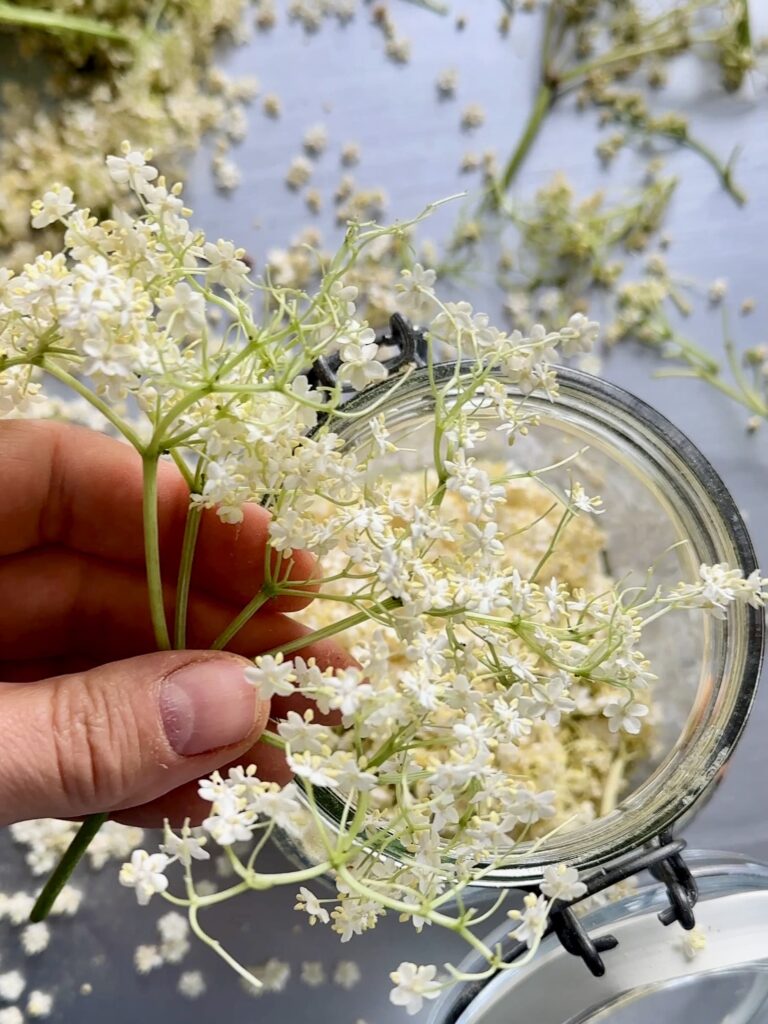
- Elderflowers: Use only fully open umbels, collected on a sunny, dry day if possible. The flowers should be clean and free from insects; do not wash them.
- Balsamico Bianco: A light, mild vinegar that preserves and subtly enhances the delicate flavour of elderflower.
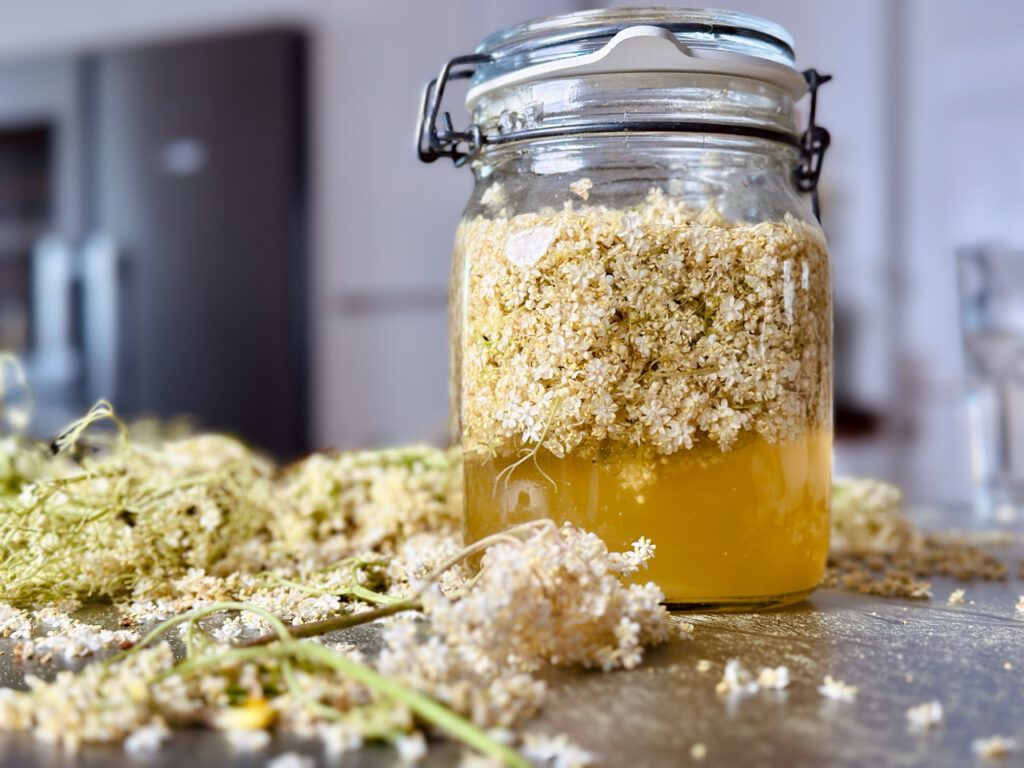
Method
Checking elderflowers: When collecting them, make sure the umbels are free from insects. Use only clean umbels.
Do not wash Do not wash the flowers with water, as this will cause the aromatic pollen to be lost.
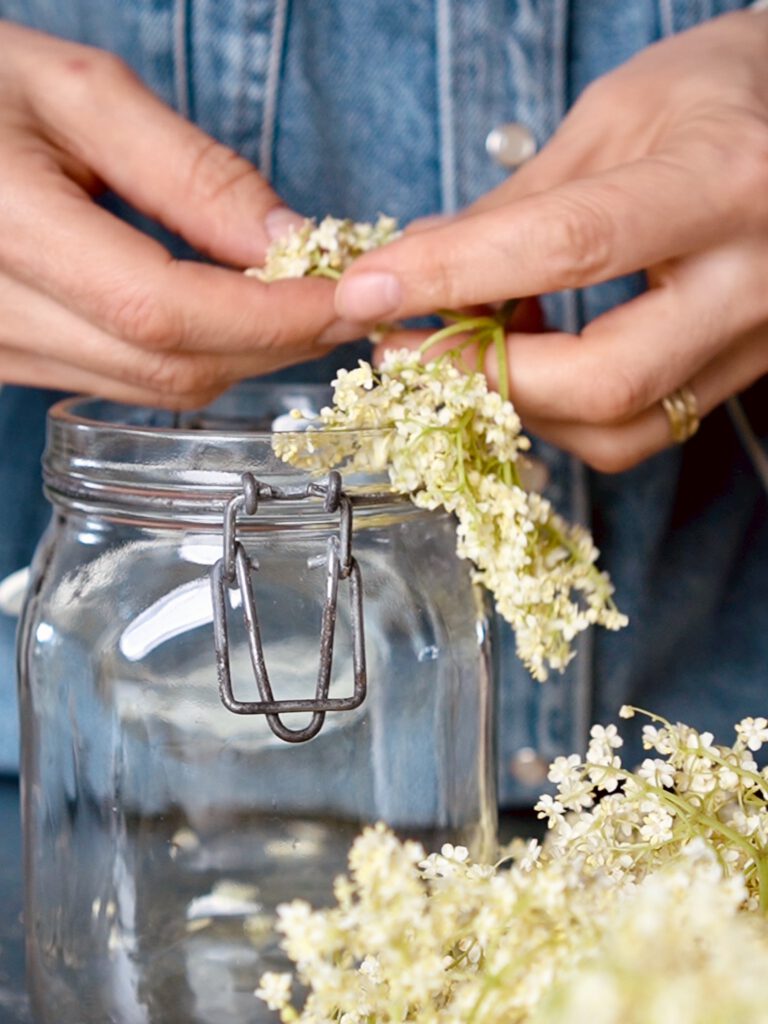
Remove the stalks. Remove the thick green stalks, but leave the thin flower stalks attached to the flowers.
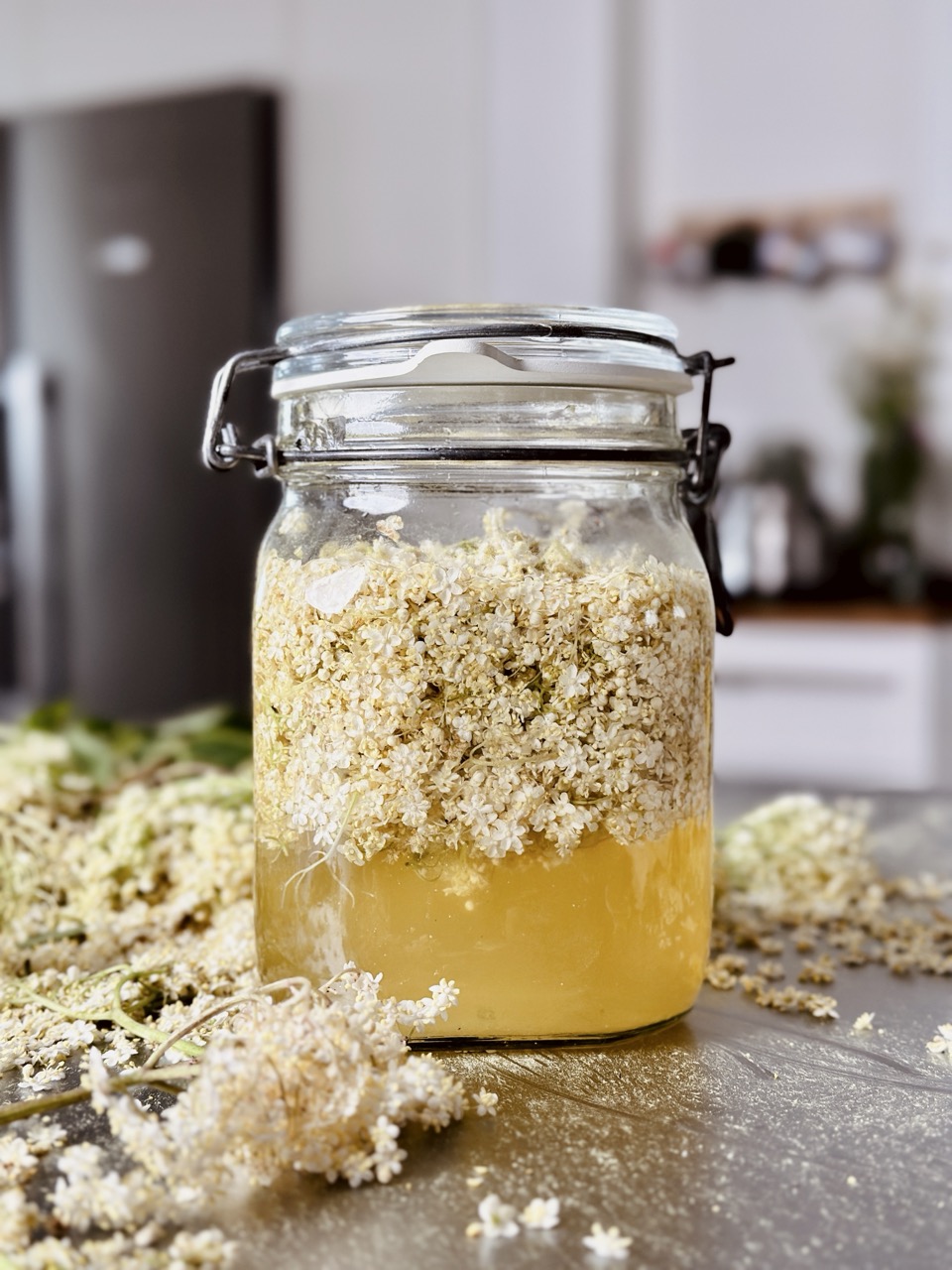
Place the flowers in a glass container. Use a large, clean glass container. Fill it loosely with the flowers, without pressing them down.
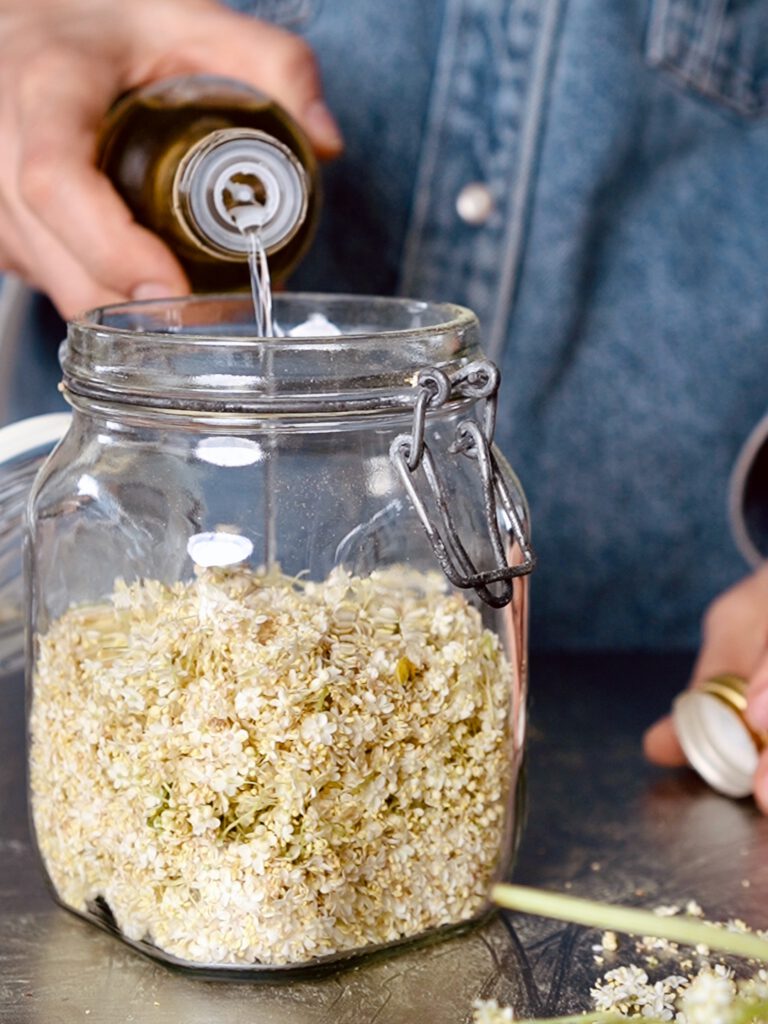
Pour vinegar over the flowers. Pour the Balsamico Bianco over the flowers whilst they are cold. There is no need to heat it – the flavours will infuse into the vinegar as it is. This cold maceration preserves the delicate, volatile floral aromas particularly well.
Leave to infuse. Seal the jar and leave it in a dark, cool place at room temperature. The infusion period is at least three weeks, but can easily be extended to up to six months. The longer the vinegar infuses, the more intense the flavour becomes.
You’ll start to see great results after just 3 weeks. After 2 months, I found the vinegar rather disappointing – but after waiting a further 4 months, the result was fantastic. Don’t give up if you’re not keen on the taste at first. It’s really worth it!
Straining and bottling: Strain the vinegar through a fine sieve or a muslin cloth to remove any remaining flower petals. Pour into clean, ideally sterilised bottles.
Storage: Keep in a cool, dark place. This will ensure that the elderflower vinegar retains its delicate flavour for a long time.
Variations
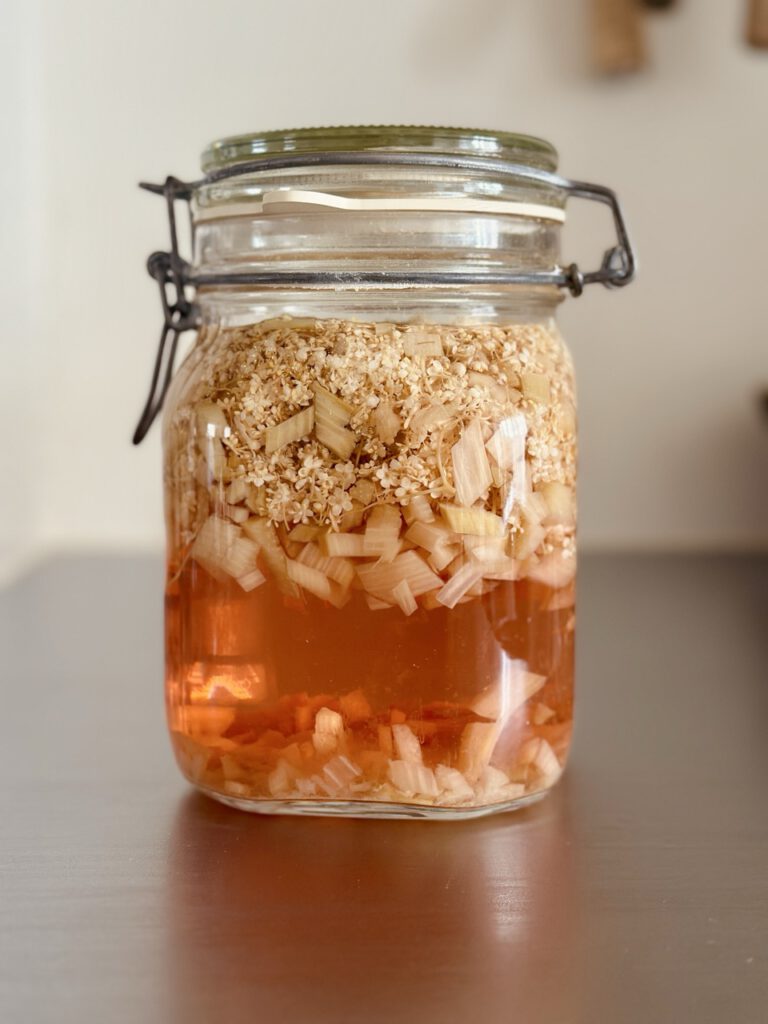
- Citrus note: Add a few strips of untreated lemon or orange peel – this complements the floral note with a fresh tang. Rhubarb is also a great choice!
- Herbal flavour: A small sprig of rosemary, thyme or tarragon adds a more savoury depth to the vinegar.
- Adjust the sweetness: Sweeten slightly with a little honey or agave syrup whilst bottling to achieve a milder, rounder flavour profile.
Serving suggestions
- As a base for summery vinaigrettes, e.g. with honey and mustard
- For adding a touch of flavour to light sauces or dips
- Drizzle over grilled vegetables or fruit
- In fruit desserts, e.g. with strawberries or peaches
- A few drops in mineral water or spritz drinks for a hint of flavour
Frequently Asked Questions
Can I also make the vinegar using dried elderflowers?
In principle, yes, but fresh flowers give a much more intense flavour. With dried flowers, the floral character is often less pronounced.
How do I know when it’s the right time to strain it?
Once the vinegar has developed the desired flavour – usually after 3 to 6 weeks – it can be strained. Leaving it to infuse for longer intensifies the flavour, but also alters it.
Why shouldn’t you wash the flowers?
The delicate aroma is mainly found in the pollen. Washing them would cause this to be lost, and the vinegar would be significantly less aromatic.
How long does the vinegar keep?
Provided it is handled hygienically and stored in a cool, dark place, elderflower vinegar will keep for at least a year, and often considerably longer.
More delicious recipes
Please do feel free to leave me a comment – I’m always delighted to hear from you!
You can also find me on Instagram, Facebook, TikTok and YouTube to get a glimpse behind the scenes of my blog.
Recipe Card
*This recipe card contains Amazon affiliate links. As an Amazon affiliate, I earn a commission on qualifying sales. However, this won’t affect the price you pay!
Homemade Elderflower Vinegar
Ingredients
Equipment
Method
- When picking the elderflowers, make sure the umbels are free from insects. Discard any affected umbels.
- Do not wash the umbels, as this will cause the pollen to be lost.
- Remove the thick green stalks, leaving the thin flower stalks attached to the blossoms.
- Place the flowers in a large, clean glass container.
- Pour the Balsamico Bianco over the flowers whilst cold; there is no need to heat it. The maceration will start regardless.
- Seal the container and leave to infuse in a dark place at room temperature for 3 weeks up to 6 months. The longer the infusion time, the more intense the flavour.
- Strain the vinegar through a fine sieve or muslin cloth and pour into a clean bottle. Store in a cool, dark place.

Leave a Reply