
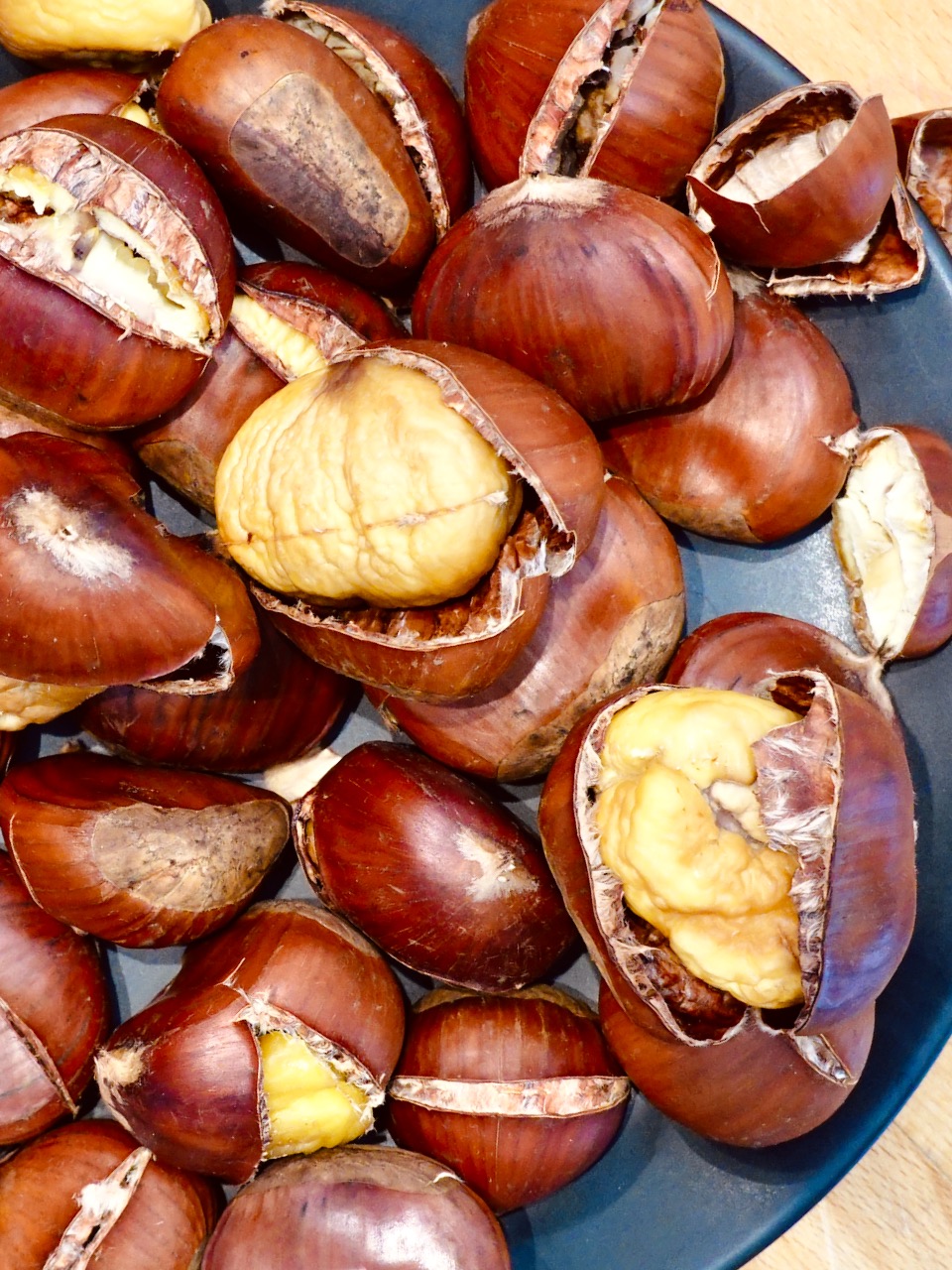
For me, oven-roasted chestnuts are as much a part of autumn as the first mist over the lake. As soon as it starts to get colder, chestnut roasters appear on the street corners in Zurich, and that warm, sweet, smoky scent wafts through Bahnhofstrasse. At some point, I spotted them in the supermarket and started making them at home.
The key is the water – twice, in fact. The chestnuts are soaked for an hour beforehand, and there’s also a bowl of water in the oven, which is poured over the hot baking tray during the second half of the baking time. The steam produced by this process separates the shell from the nut, and this is precisely where things usually go wrong: if you roast chestnuts without any moisture, you’ll end up struggling with every single one.
Chestnuts, marrons, marroni: they all refer to the same fruit, but are known by different names depending on the region. In Switzerland and Ticino, the term “marroni” is used, while in Germany “maronen” or “edible chestnuts” are more common. Botanically speaking, “marrone” strictly refers to the larger, finer variety, but in everyday language the distinction has long since been abandoned.
Ingredients for oven-roasted chestnuts
Before you start, here are the ingredients you’ll need for this recipe. The exact quantities are listed in the recipe card at the end of the article!
Chestnuts — fresh, heavy to the touch and with no holes in the shell. The fresher they are, the sweeter they taste and the easier they are to peel.
Water — once for soaking and once for the steam in the oven. Together, these ensure that the skin comes away.
How to make oven-roasted chestnuts – step by step
The process is simple, but it does require a bit of preparation: the one-hour soaking time cannot be shortened. After that, everything goes quickly, and the chestnuts are ready after half an hour in the oven.
Soak the chestnuts for an hour
Place the chestnuts in a bowl and cover them completely with water. Leave them to stand for an hour. The skin will absorb moisture during this time, which makes them easier to cut into and later allows steam to build up between the skin and the kernel.
Chestnuts that float to the top while soaking are usually dried out inside or infested with worms. Sort these out to avoid disappointment later on.
Cut into the shell
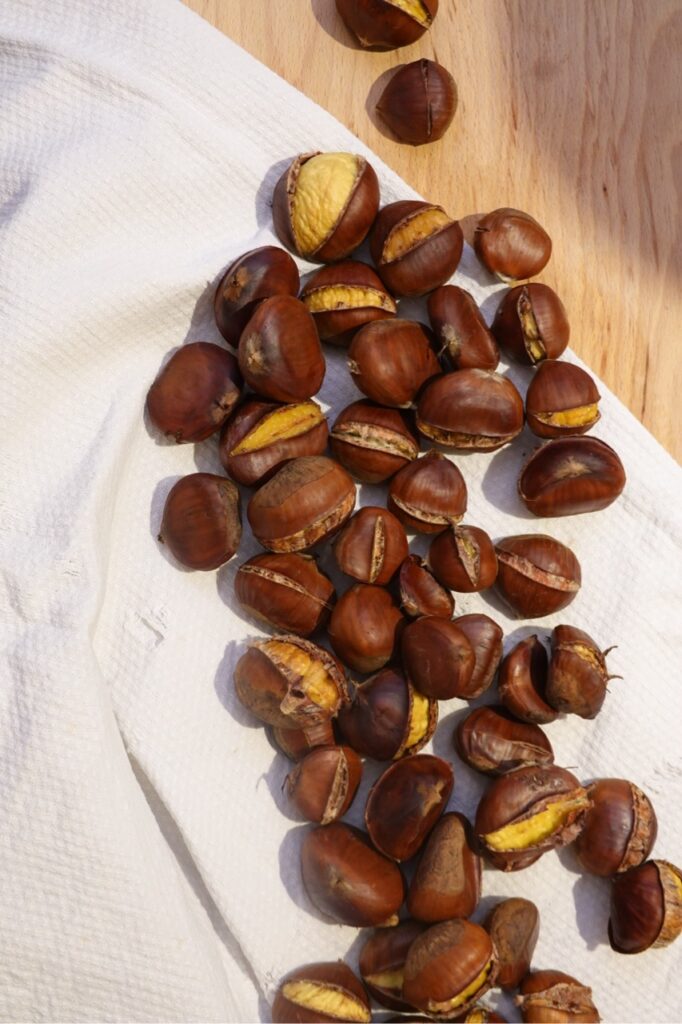
Drain the chestnuts and pat them dry with a tea towel. Then, using a chestnut knife or a serrated knife, make a shallow cut into the rounded side of the shell – cutting only the shell, not the flesh underneath.
The cut is not just a decorative detail, but a safety feature: without it, the steam inside cannot escape and the chestnuts will burst in the oven.
Preheat the oven with the baking tray inside
Preheat the oven, with a baking tray on the second shelf, to 250 degrees on the fan setting. The hot tray transfers the heat directly to the chestnuts as soon as they are placed on it.
Bake for the first 15 minutes
Place the chestnuts on the hot baking tray with the cut side facing upwards. Place a heatproof bowl containing 150 ml of water next to them and bake for 15 minutes.
Pour the water onto the baking tray
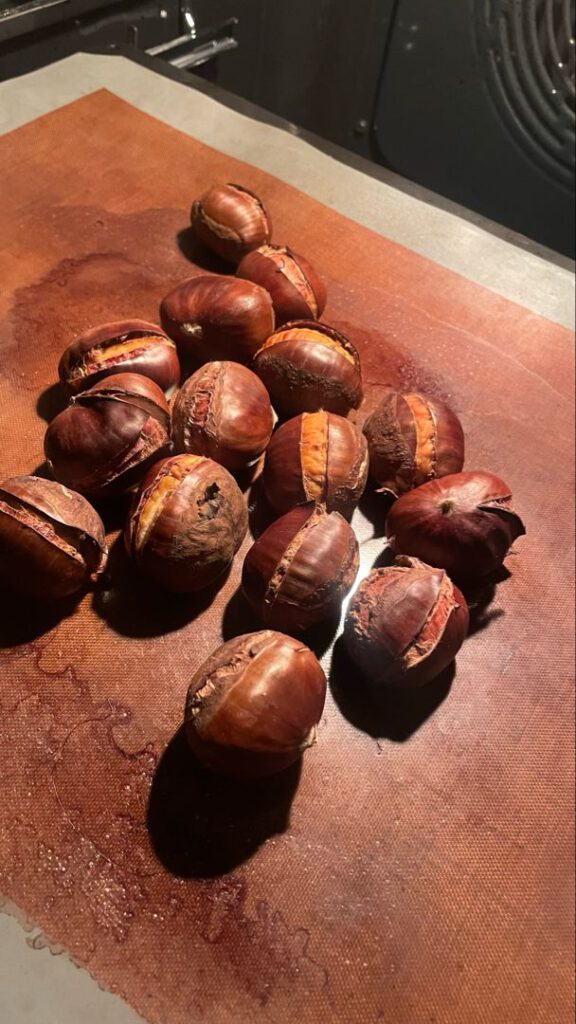
After 15 minutes, pour the water from the bowl over the hot baking tray. It will evaporate immediately, and the steam will loosen the shells. Bake for a further 15 minutes at 250 degrees.
Take care when pouring: the steam shoots up suddenly. It’s best to pull the tray out a little and pour from a distance.
Peel while still warm and serve
Remove the chestnuts from the oven and peel them while they are still warm. The skin, along with the brown inner membrane, comes off most easily while they are still hot.
Tips & Variations
The quality of the chestnuts is almost everything. Good ones are heavy for their size, have a shiny, plump shell and no small holes, as these are caused by worms.
A chestnut knife with a curved blade isn’t just a gimmick; it makes cutting into the chestnuts much safer than a normal knife.
If you wrap the chestnuts in a tea towel for a few minutes after baking them, they’ll be even easier to peel, as the residual steam stays in the towel and continues to do its job.
Shelled chestnuts are wonderfully versatile: as an accompaniment to game, puréed in a soup, in a stuffing for turkey or chicken, or glazed in butter and sugar as an accompaniment to autumnal dishes. And if you fancy the classic way, simply serve them as they are – warm in a paper bag – just like at a chestnut stall.
Storage
Room temperature: roasted chestnuts taste best when warm and should be eaten on the same day. Raw chestnuts will keep for about a week in a cool, well-ventilated place.
Fridge: Raw chestnuts will stay fresh in the vegetable drawer for two to three weeks. Roasted and peeled chestnuts will keep for two to three days if covered.
Freezer: Peeled, roasted chestnuts can be frozen in portions and will keep for around six months. Use them straight from the freezer; do not defrost them.
FAQ on oven-roasted chestnuts
Steam builds up inside the chestnuts during baking. Without a cut, the steam has nowhere to escape and the chestnuts will burst in the oven. A cut on the rounded side is sufficient; it just needs to cut through the shell.
Good chestnuts feel heavy and have a shiny, plump shell without any holes. A simple test: when soaked, old or damaged ones float to the top and can thus be easily sorted out.
The steam loosens the shell from the nut and prevents the chestnuts from drying out. Without this step, they will cook through, but will be much harder to peel.
Usually, the chestnuts have cooled down too much. The shells come off most easily when they’re warm. After baking, wrap them in a tea towel for a few minutes; the residual steam will help.
Soaking and scoring them can easily be done a few hours in advance. It’s best to roast them just before serving, as they taste best when warm and are easiest to peel.
Recipes tried and tested: Your brilliant photos!
More delicious recipes
Please do feel free to leave me a comment – I’m always delighted to hear from you!
You can also find me on Instagram, Facebook, TikTok and YouTube to get a glimpse behind the scenes of my blog.
Recipe Card
This recipe card contains Amazon affiliate links. As an Amazon affiliate, I earn a commission on qualifying sales. However, this won’t affect the price you pay.
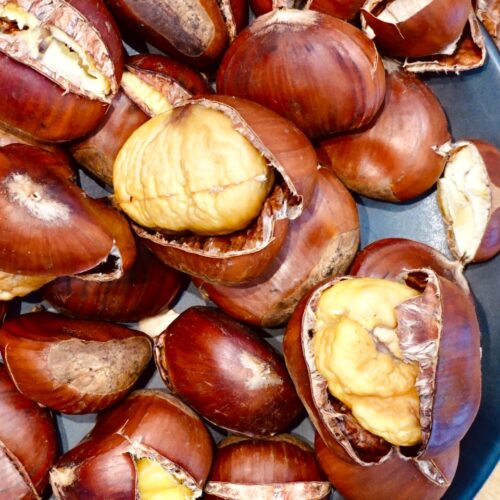
Oven-Roasted Chestnuts
Equipment
- 1 Chestnut knife or serrated knife
- 1 Baking tray
- 1 heatproof bowl
Ingredients
- 1 kg chestnuts
- Water for soaking
- 150 ml water for the steam
Instructions
- Put the chestnuts in a bowl, cover with water and soak for 1 hour.
- Drain the chestnuts and rub them dry with a cloth. Score the rounded side of the shell with a chestnut knife or a serrated knife, cutting through the shell only.
- Preheat the oven to 250 °C / 480 °F fan, with a baking tray on the second shelf.
- Place the chestnuts on the hot tray, put a heatproof bowl with 150 ml water next to them and bake for 15 minutes.
- Pour the water from the bowl over the tray and bake for another 15 minutes at 250 °C / 480 °F.
- Peel the chestnuts while still warm and serve.
Video
Notes
- Chestnuts that float during soaking are usually dried out or infested and should be discarded.
- Wrapping the chestnuts in a tea towel for a few minutes after baking makes them even easier to peel.
- Peel while warm, it is much harder once they have cooled.

Leave a Reply