
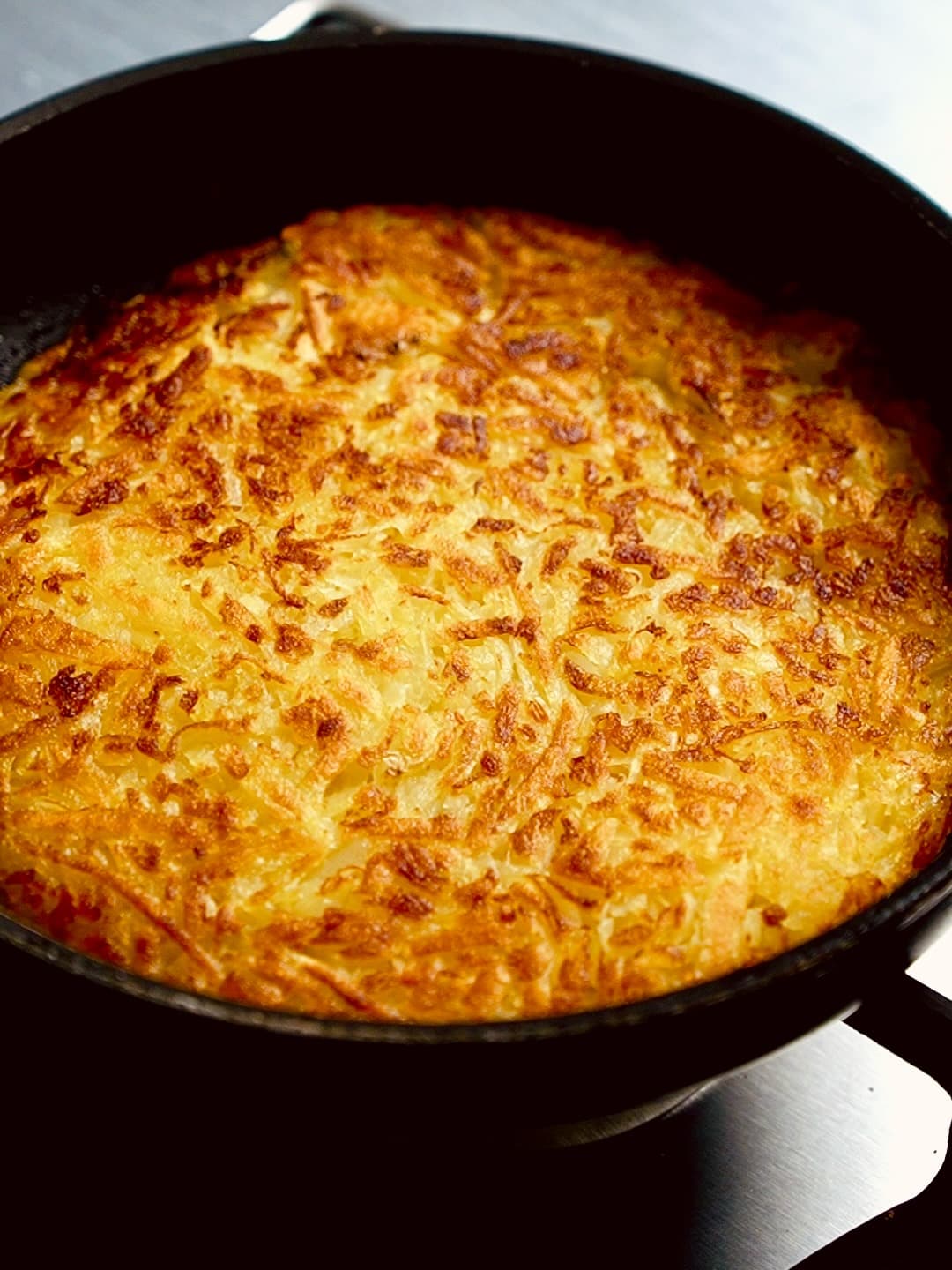
Swiss rösti – the original recipe is always a winner!
The perfect accompaniment to any dish, vegan or vegetarian, anything is possible with potatoes! When making rösti, it is essential to use the right type of potato and, crucially, to grate the potatoes correctly. It may sound funny, but it makes all the difference.
Swiss rösti is much more than just a potato side dish. It is a symbol of Swiss cuisine and its rural roots. Originally conceived as a breakfast for farmers, rösti has evolved over time into a versatile dish that can be both rustic and refined.
The basic ingredients
The basic ingredients are simple: potatoes, salt and a little fat. But the real magic lies in the preparation. From choosing the right type of potato to the perfect amount of heat and oil, every detail influences the end result. Traditionally, rösti is fried in a pan until it is golden brown and crispy. But today there are numerous variations, from the addition of onions and bacon to cheese.
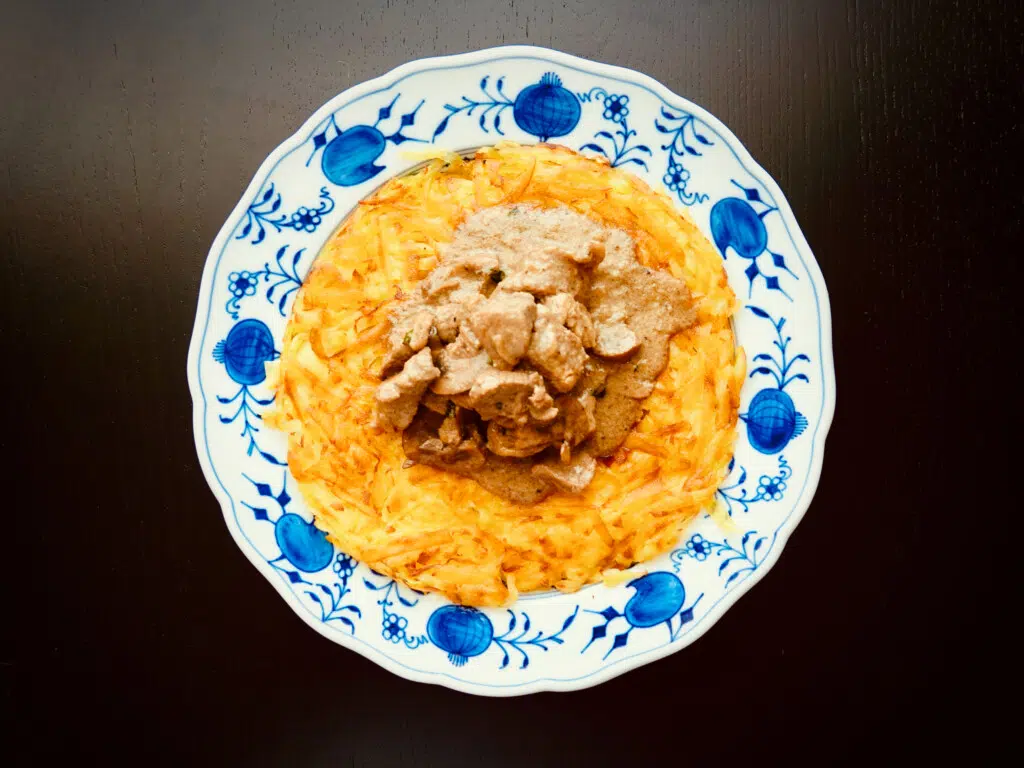
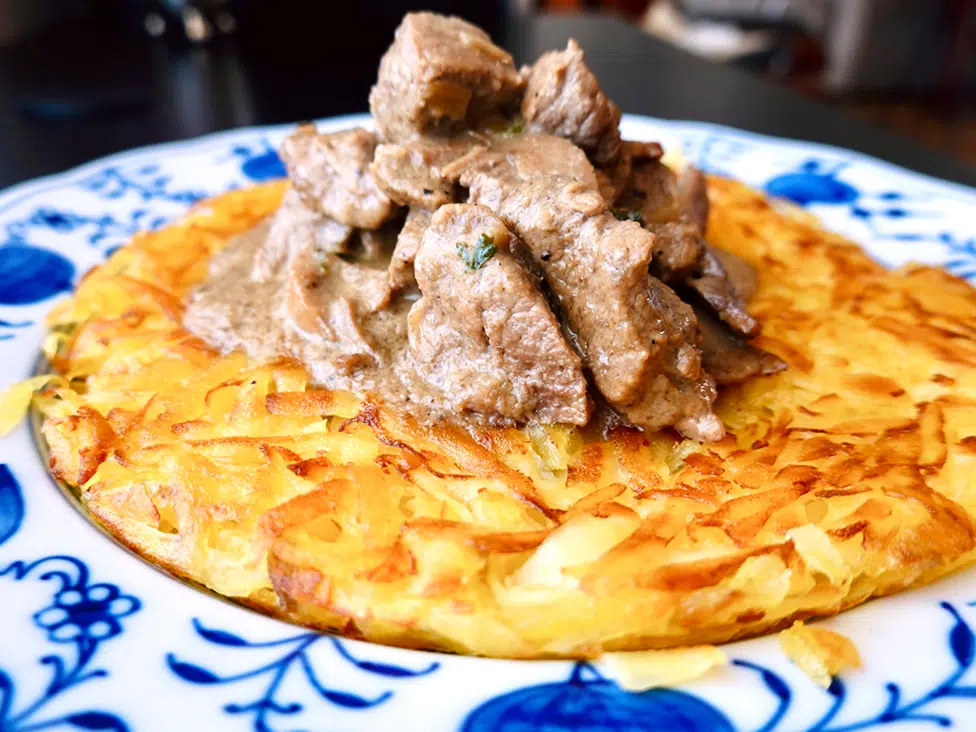
It goes perfectly with Zürcher Geschnetzeltes, which is now one of Switzerland’s national dishes. You can find the recipe here.
Which potatoes?
For rösti, you need floury potatoes. In Switzerland, the Agria variety is very suitable. Incidentally, Agria was named Potato of the Year 2022. Boil the potatoes the day before until they are three-quarters cooked and leave them to cool. Then place them in the refrigerator. This will make them wonderfully chewy and give them the perfect consistency for your rösti.
Ingredients for Swiss rösti
Before you start, here are the ingredients you will need for this recipe. The exact quantities are listed in the recipe card at the end of the article!
Floury potatoes: varieties such as Agria are particularly suitable as they develop a nice binding when fried.
Salt: for the spicy base note, I prefer to use fleur de sel.
Frying butter: frying butter is clarified Swiss butter. Frying butter can be heated to a high temperature and is particularly suitable for frying.
Butter: This provides the buttery kick.
Here’s how to prepare it
Prepare the potatoes: Cook the potatoes the day before until they are about three-quarters done. Then let them cool completely and store them in the refrigerator overnight. This ensures the ideal consistency and improves the binding when frying.
Grate and season: Peel the cold potatoes and grate them using a coarse grater. Hold the potatoes lengthways to create longer strips – this helps to make the most of the potato starch. Then season with salt.
Start frying: melt half of the frying butter in a pan over medium heat, then increase to the highest setting. Add the grated potatoes to the pan and shape into a compact patty.
Develop a crispy crust: Fry the rösti for about 3 minutes on a high heat, then reduce the heat and continue to fry slowly for about 15 minutes. If you hear a crispy ‘sizzling’ sound when you move the pan, that’s a good sign.
Flip and finish: Flip the rösti with a plate, spread the remaining butter in small pieces around the edge and fry for another 10 minutes. Again, make sure it sounds nice and crispy.
Serve: Remove the finished rösti from the pan and serve immediately while hot.

Frequently asked questions
Which type of potato is best suited for rösti? Floury potatoes such as Agria or Bintje are ideal, as they develop a good binding consistency after cooking.
Can I also make Swiss rösti with raw potatoes? Yes, it is possible, but classic Swiss rösti is made with pre-cooked potatoes, as this gives it a better consistency and crispiness.
How do I store leftover rösti? It is best to store it in the refrigerator in an airtight container. To reheat, simply fry in a pan with a little butter until crispy.
What additional ingredients can I use? For a hearty version, you can mix diced bacon, onions or grated cheese into the grated potatoes.
Is it a side dish or a main course? Rösti is excellent as a side dish with meat dishes or can be served as a main course with a fried egg and some chives.
Which pan should I use? A coated or well-seasoned cast iron pan helps to get the rösti perfectly crispy.
Don’t hesitate to leave me a ⭐️ comment, I always appreciate it!

You can also find me on Instagram, Facebook, TikTok and YouTube, to take a look behind the scenes of my blog.
Recipe Card
*The recipe card contains Amazon affiliate links. As an Amazon partner, I earn from qualifying sales. However, your price remains the same!

Swiss Rösti – The Original Recipe
Ingredients
- 1 kg floury potatoes e.g. Agria
- 1 pinch of salt
- 100 g clarified butter
- 1 tbsp butter
Instructions
- The potatoes should be cooked 3/4 of the way through the day before. Once they have cooled, they should be stored in the refrigerator. This will make them rubbery. This is crucial for the rösti to turn out well.
- Peel the potatoes. Now slowly grate them using a potato grater, holding them lengthways. Very important!!! This makes the potato shavings longer, allowing the starch to bind better later when frying – tip from Stef Wieser (Swiss chef). Then add salt.
- Melt 50 g clarified butter in a frying pan over a medium heat. Then turn up the heat to high, add the grated potatoes to the pan and shape into a rösti. ↓ See video.
- Fry on a high heat for 3 minutes, then turn down the heat to low. Fry the rösti slowly for approx. 15 minutes. It should sound crispy or ‘whistle’ when you shake the pan.
- Now flip the rösti over with the help of a plate and continue to fry for 10 minutes. Cut the butter into small pieces and spread them around the edges. This gives the rösti an extra kick of butter and makes it even crispier. Wait again until the rösti sounds crispy when you shake the pan. Done.


Leave a Reply