
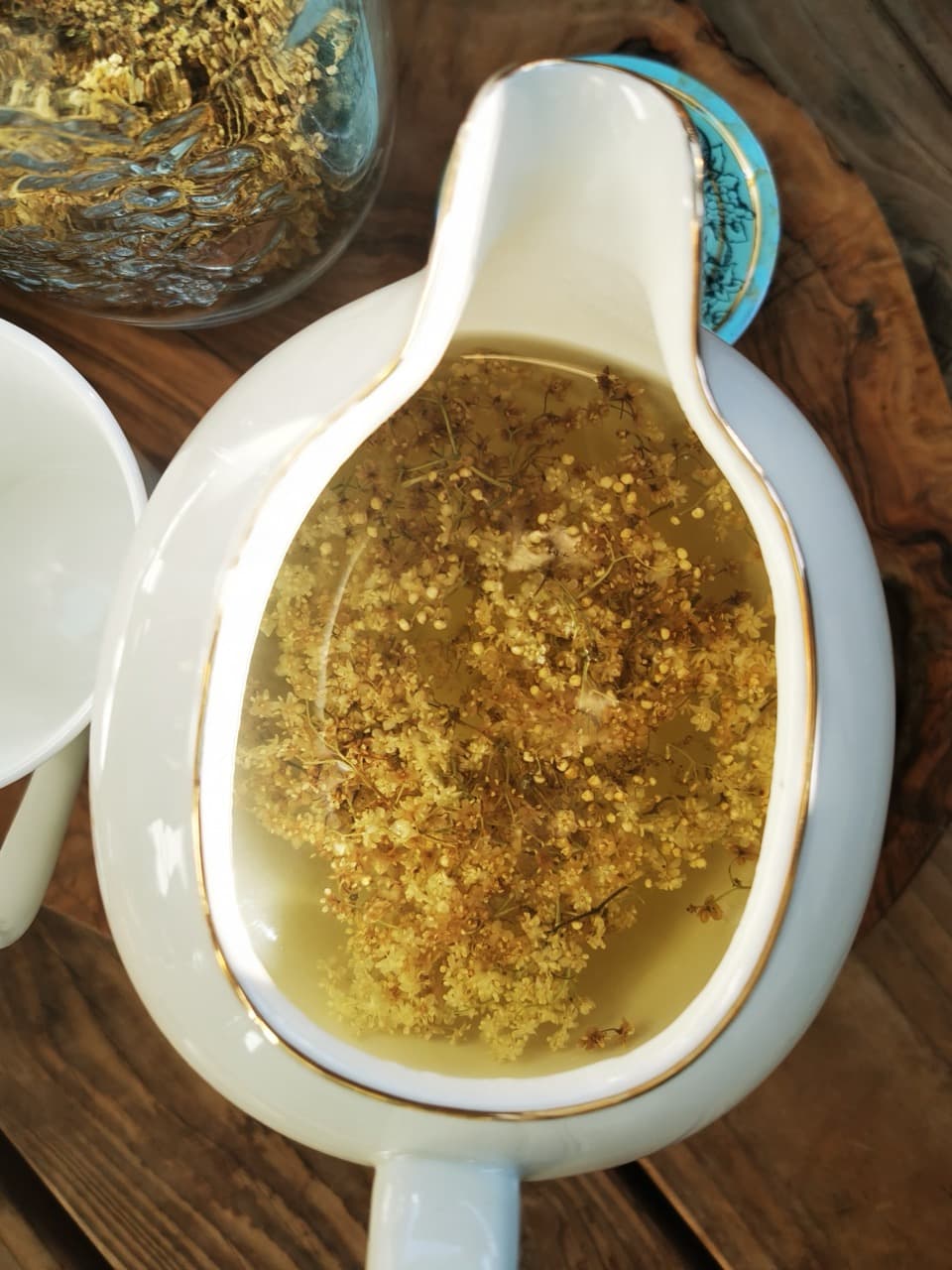
Every May, when the elderberry bushes are in full bloom, it’s time for me to go foraging. The scent is indescribable! I let the umbels dry, store them in a jar — and I have my own elderflower tea to enjoy all winter long. If you don’t have any elderberry bushes nearby, you can find dried flowers in health food shops or at the chemist’s.
What makes this recipe special?
Elderflower tea is really easy to make yourself — whether using fresh blossoms from the garden or dried flowers from your pantry. I’ll show you both methods, explain the difference, and tell you why it’s so important to cover the tea whilst it’s steeping.
How I make elderflower tea – step by step
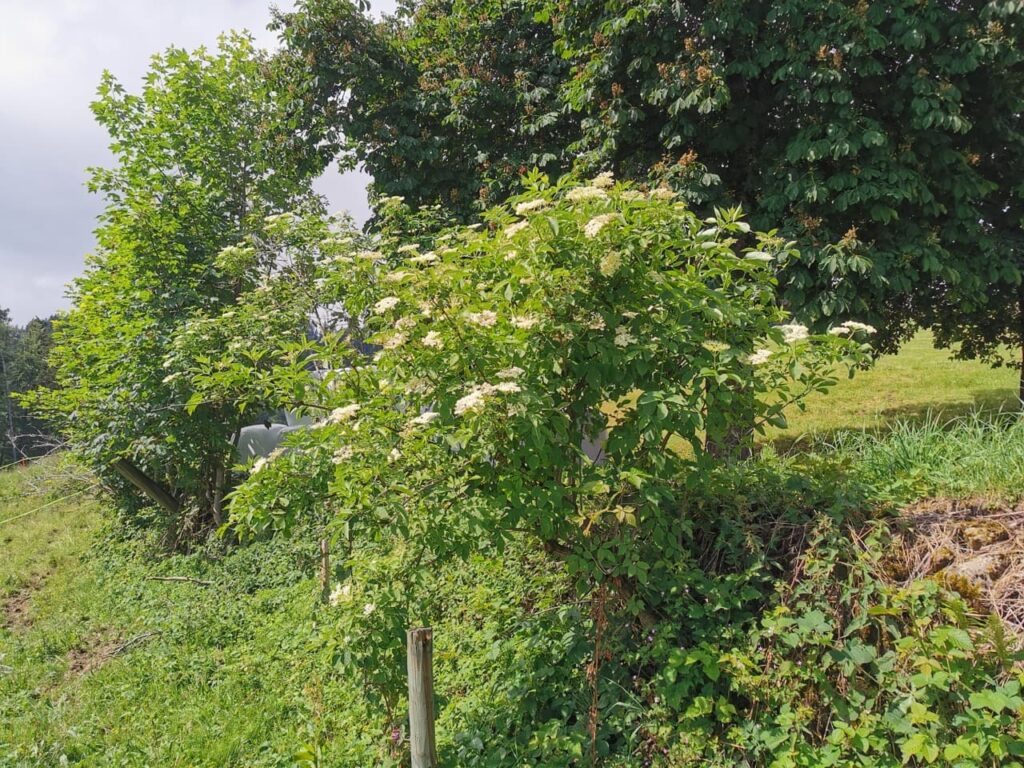
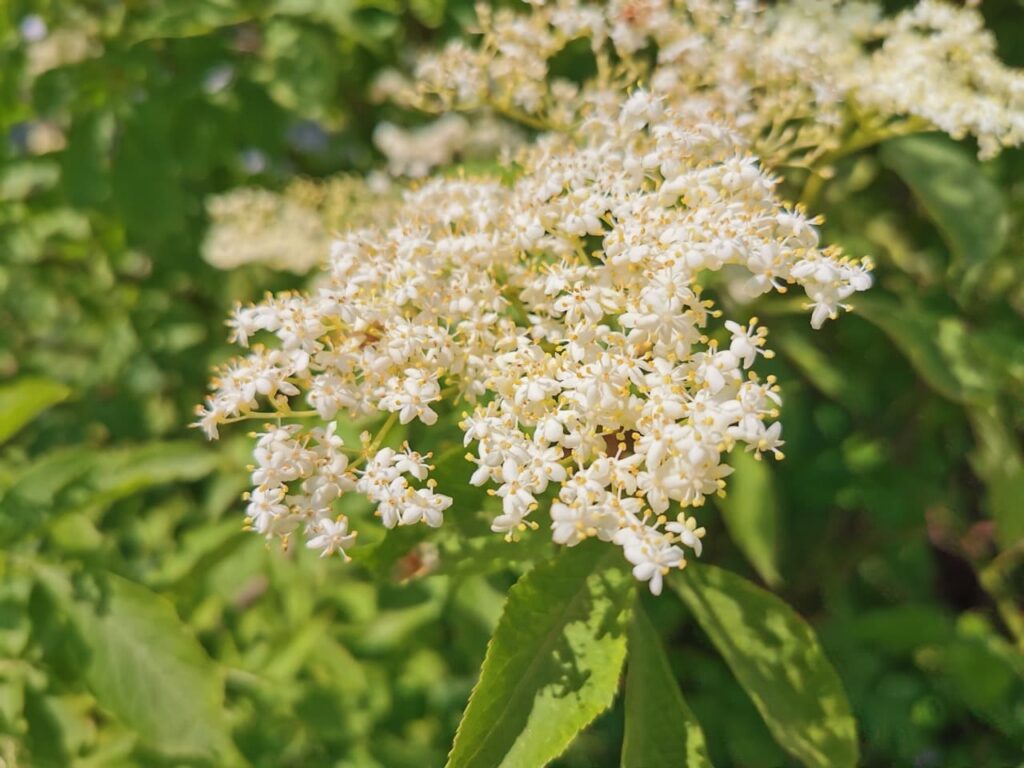
Step 1. Collect and dry the umbels
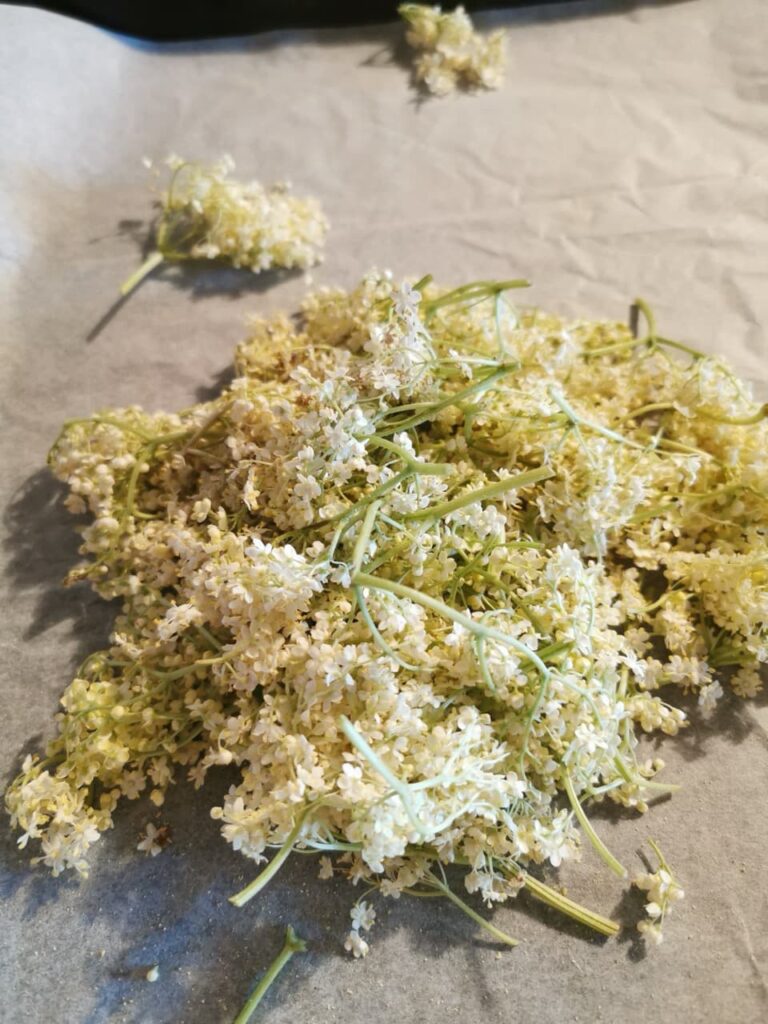
Harvest the umbels when they are fully open and smell wonderful — this is when the essential oils are at their strongest. Check for insects on the underside. Cut the umbels off with secateurs; do not tear them. Carry them home in a linen bag or paper bag and place them on a tray lined with baking paper. Check whether any insects are still crawling away. Do not wash them — this reduces the aroma. Leave to dry in an airy, shady spot for 2–3 days. Alternatively, dry them in the oven at 35–40°C with the door slightly ajar. Store in a sealed glass jar in a cool, dark place.
Step 2. Make tea — fresh umbels
Use 1 large fresh flower head per cup (200–250 ml). Pour boiling water over it, cover, and leave to steep for 5–10 minutes. Covering it is important — this ensures the essential oils remain in the tea.
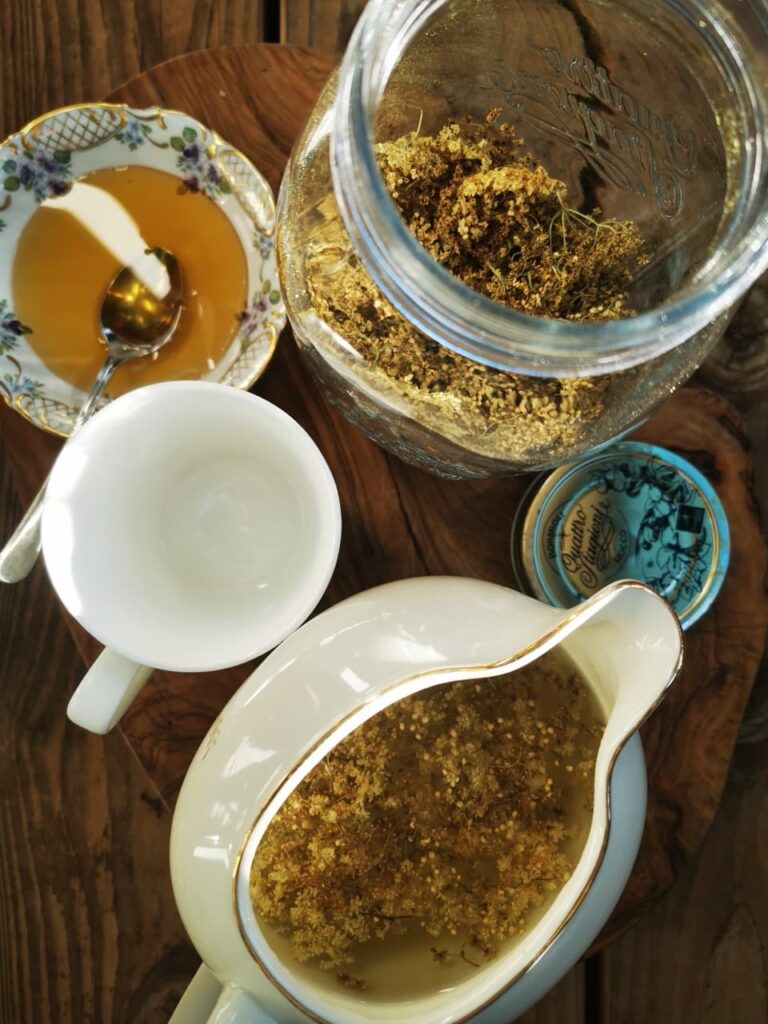
Step 3. Making tea — dried umbels
1–2 teaspoons of dried flowers per cup (200–250 ml). Important: Always pour over boiling water and leave to steep, covered, for at least 5–10 minutes — this is the only way to ensure the tea is safe to drink. If you like, you can add a teaspoon of honey or a squeeze of lemon.

Tips & Variations
- Enjoy the tea cold too — let it cool and serve with ice cubes.
- Add a slice of ginger or some lemongrass – it adds a warming touch.
- During the colder months, enjoy a few cups a day – it’s soothing and warms you from the inside.
Storage
- Fresh tea: Best enjoyed fresh.
- Dried flowers: Store in a cool, dry place and keep tightly sealed — ideally in a dark glass jar. Will keep for up to a year.
FAQ on making your own elderflower tea
May and June are the classic elderflower months — as soon as the umbels are fully open and give off a strong fragrance.
It’s best not to — it reduces the flavour. Just place them on a large leaf and any insects will crawl out, if there are any at all. Keep an eye out for this when picking them and avoid those umbels.
Otherwise, the essential oils from the flowers will evaporate with the steam — but if you cover it, they’ll stay in the tea.
More delicious recipes featuring elderflowers
Please do feel free to leave me a comment – I’m always delighted to hear from you!

You can also find me on Instagram, Facebook, TikTok and YouTube to get a glimpse behind the scenes of my blog.
Recipe Card
This recipe card contains Amazon affiliate links. As an Amazon Associate, I earn from qualifying purchases. The price you pay stays exactly the same.
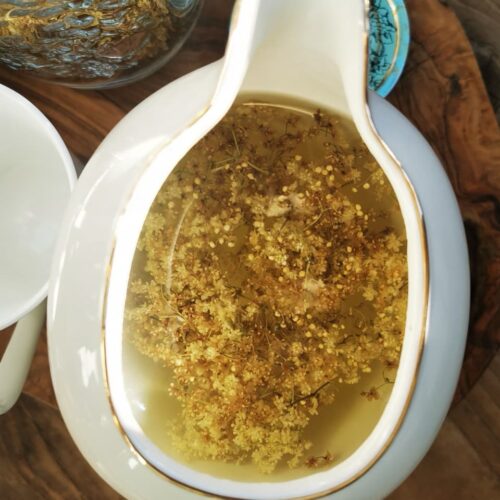
Elderflower Tea — from Fresh and Dried Flowers
Equipment
- Garden scissors
- Linen bag or paper bag
- Baking tray with baking paper
- Sealed glass jar (for storage)
- Teapot or cup with lid
- Tea strainer
Ingredients
- 2–4 fresh elderflower heads OR 2–4 tsp dried elderflowers
- 500 ml boiling water
- 1 tbs Honey and lemon to taste optional
Instructions
- Harvest flower heads when fully open and fragrant — that’s when the essential oils are strongest. Check the underside for insects. Cut with scissors, don’t tear. Carry home in a linen bag or paper bag. Do not wash — this reduces the aroma. Dry in a cool, shady spot for 2–3 days or at 35–40°C in the oven with the door slightly ajar. Store in a sealed glass jar in a cool, dark place.
- Place flowers in a teapot or cup.
- Pour over boiling water.
- Cover and steep for 5–10 minutes.
- Strain, add honey and lemon to taste and enjoy.

Leave a Reply